What is the material?
Record composition, feed size, hardness, moisture and whether particles are brittle, fibrous, sticky or ductile. Identify elements or residues that must not be introduced.
 PLANETARY BALL MILLS
PLANETARY MILL SELECTION
From the first few grams to a larger batch: choose the motion, jar capacity and process controls that fit your material and the result you need.
A model number comes later. These details determine whether a machine can support your work, how to size it and which accessories belong in the quotation.
Record composition, feed size, hardness, moisture and whether particles are brittle, fibrous, sticky or ductile. Identify elements or residues that must not be introduced.
Specify grinding, mixing, dispersion or mechanical alloying. For size reduction, name the target statistic—D50, D90 or an upper size limit—and how it will be measured.
Give the sample mass per jar, bulk density or measured volume, number of different samples and batches per day. Include recovery, cleaning and changeover time.
Define dry or wet milling, intended liquid, maximum sample temperature and atmosphere requirements. State available space, electrical supply and any handling restrictions.
Planetary milling is one route to sample preparation. Compare the motion and process before comparing machine speed or nominal capacity.
| Mill type | How it works | A useful starting point | What to check |
|---|---|---|---|
| Planetary | Jars rotate while travelling around a revolving disc. | Batch fine grinding, blending and mechanochemical research requiring substantial impact and friction. | Jar compatibility, contamination, heating, balancing and achievable distribution. |
| Roller / drum | A jar rolls about its own axis; media tumble through the charge. | Longer mixing cycles and gentler batch processing. | Jar diameter, roller spacing, permitted load and required cycle time. |
| Vibration | Rapid oscillation drives repeated media impacts. | Rapid preparation of suitable small, brittle samples. | Jar system, batch size, impact response and temperature rise. |
| Stirred | An agitator moves media within a grinding chamber. | Slurry dispersion and wet fine-grinding processes. | Viscosity, media separation, cooling and whether the specific model supports continuous flow. |
Machine families do not share one speed, capacity or fineness rating. Compare the actual model and process. Explore laboratory milling platforms.
A revolving disc carries the jars while they rotate around their own axes. The combined motion brings impact, friction and shear to the sample.
Media need room to move through the charge. Increasing speed or extending a run can also increase heating, wear and agglomeration. A finer powder is not automatically a better sample if its chemistry or structure has changed.
Compare disc speed with disc speed and jar speed with jar speed. The drive ratio, jar geometry, media and load all affect the process; an rpm value alone does not establish equivalent grinding conditions.
Record the exact machine, jar and media materials, sample and media masses, diameter mix, liquid, speed reference, run/rest schedule, temperature and analysis method.
Nominal mill capacity, individual jar volume and usable sample load are three different quantities.
Use the jar loading guidance for the specific configuration. A general filling percentage is not a substitute for the approved working charge.
| Model | Nominal capacity | Compatible jar volume | Jar positions | Compatible vacuum jar volume | Machine mass (kg) |
|---|---|---|---|---|---|
| XQM-0.4A | 0.4L | 25-100mL | 4 | 50mL vacuum jar | 29 |
| XQM-1A | 1L | 50-250mL | 4 | 50-100mL vacuum jar | 85 |
| XQM-2A | 2L | 50-500mL | 4 | 50-250mL vacuum jar | 85 |
| XQM-4A | 4L | 250-1000mL | 4 | 50-500mL vacuum jar | 85 |
| XQM-6A | 6L | 1-1.5L | 4 | 50-1000mL vacuum jar | 85 |
| XQM-8A | 8L | 1-2L | 4 | 1-1.5L vacuum jar | 150 |
| XQM-10A | 10L | 1-2.5L | 4 | 1-2L vacuum jar | 150 |
| XQM-12A | 12L | 1-3L | 4 | 1-2L vacuum jar | 150 |
| XQM-16A | 16L | 2-4L | 4 | 1-3L vacuum jar | 205 |
| Model | Nominal capacity | Configuration class | Compatible jar volume | Jar positions | Compatible vacuum jar volume |
|---|---|---|---|---|---|
| XQM-0.4 | 0.4L | Laboratory | 25-100mL | 4 | 50mL vacuum jar |
| XQM-1 | 1L | Laboratory | 50-500mL | 4 | 50-250mL vacuum jar |
| XQM-2 | 2L | Laboratory | 50-500mL | 4 | 50-250mL vacuum jar |
| XQM-4 | 4L | Laboratory | 250-1000mL | 4 | 50-500mL vacuum jar |
| XQM-6 | 6L | Laboratory | 1-1.5L | 4 | 50-1000mL vacuum jar |
| XQM-8 | 8L | Laboratory | 1-2L | 4 | 1-1.5L vacuum jar |
| XQM-10 | 10L | Laboratory | 1-2.5L | 4 | 1-2L vacuum jar |
| XQM-12 | 12L | Laboratory | 1-3L | 4 | 1-2L vacuum jar |
| XQM-16 | 16L | Laboratory | 2-4L | 4 | 1-3L vacuum jar |
| XQM-20 | 20L | Production | 2-5L | 4 | 2-4L vacuum jar |
| XQM-40 | 40L | Production | 5-10L | 4 | 5L vacuum jar |
| XQM-60 | 60L | Production | 10-15L | 4 | 10L vacuum jar |
| XQM-80 | 80L | Production | 15-20L | 4 | 15L vacuum jar |
| XQM-100 | 100L | Production | 20-25L | 4 | 20L vacuum jar |
| XQM-200 | 200L | Production | 50L | 4 | 25L vacuum jar |
Tables are catalog compatibility references, not a guarantee that every material, lid or adapter fits. Confirm the complete assembly in the quotation. Four positions refer to these XQM families; other configurations must be checked separately. Micro XQM-0.2S and micro XQM-0.2 have their own specifications.
Use the application to shortlist a family, then compare the detailed specification and complete jar assembly.
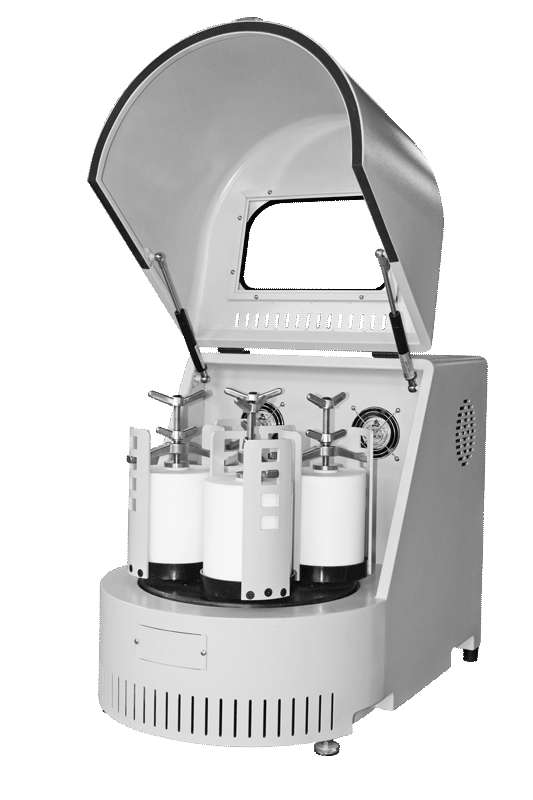
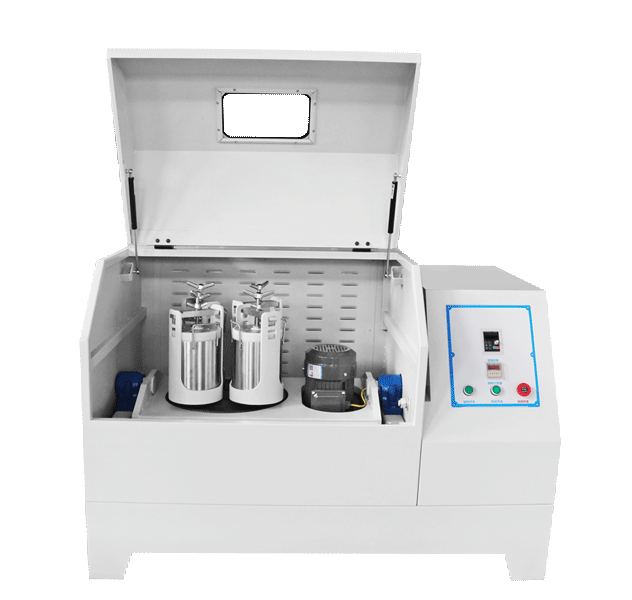
Start with a benchtop XQM-A or cabinet XQM when general batch grinding, mixing and parallel samples are the main requirement.
Assess omnidirectional motion when a conventional arrangement leaves persistent sedimentation or uneven contact. Verify the effect with your actual material.
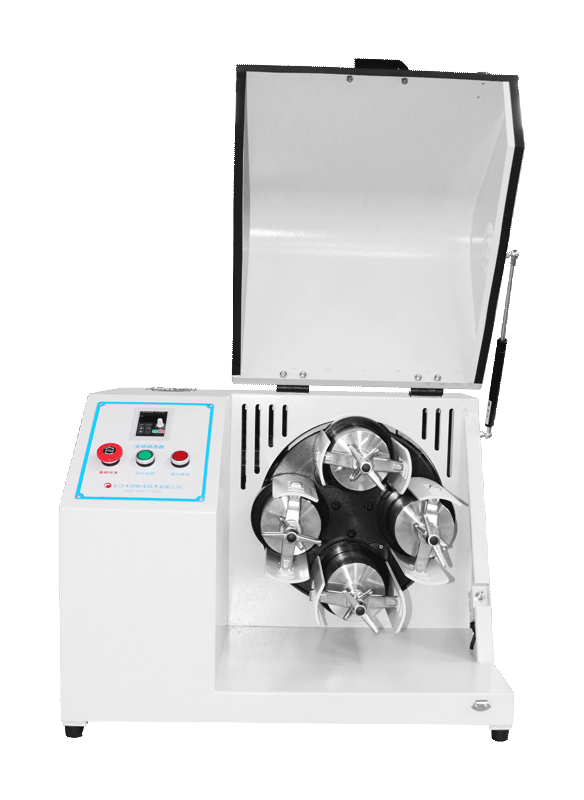
Evaluate horizontal planetary configurations for the intended load and handling. Horizontal planetary motion is distinct from a roller mill.
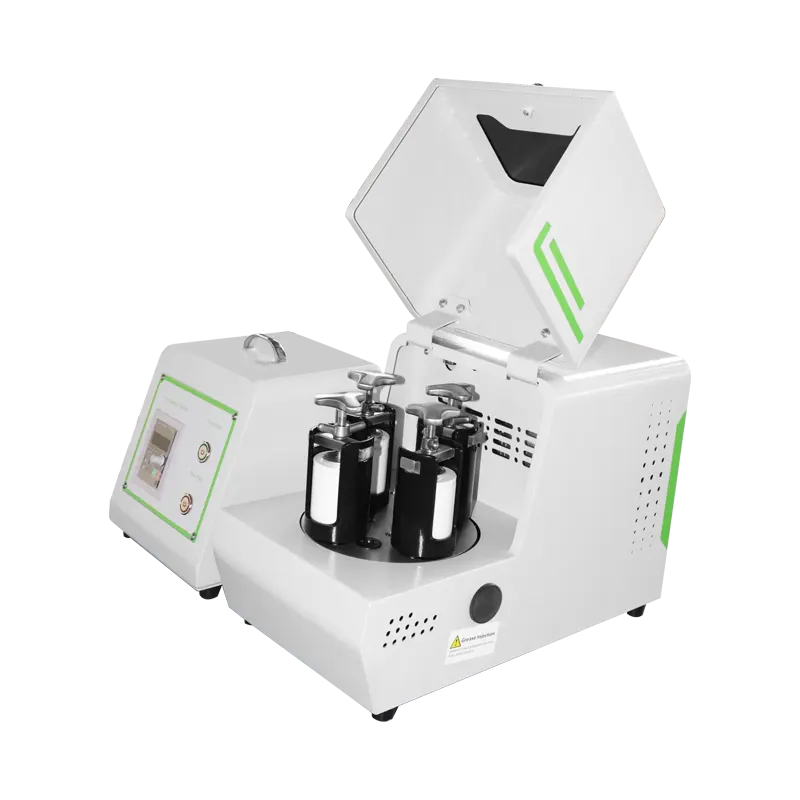
Review the micro families for small-batch research. Confirm the minimum practical charge and recovery from the selected jar.
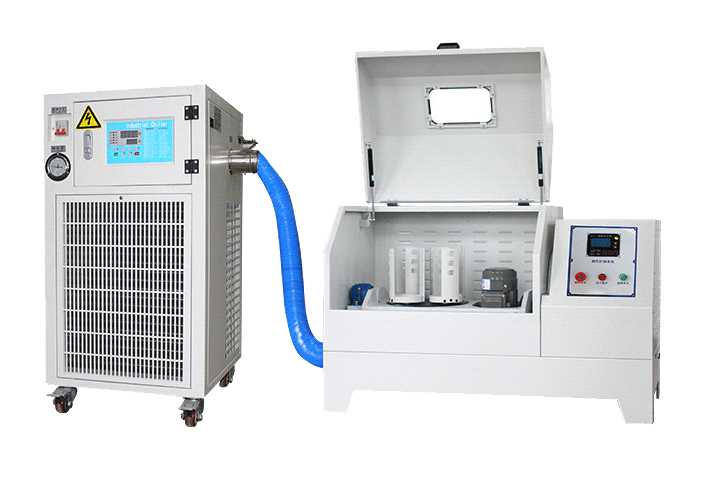
Evaluate intermittent operation and air cooling first where appropriate. Liquid-nitrogen cooling requires a specifically engineered cooling arrangement.
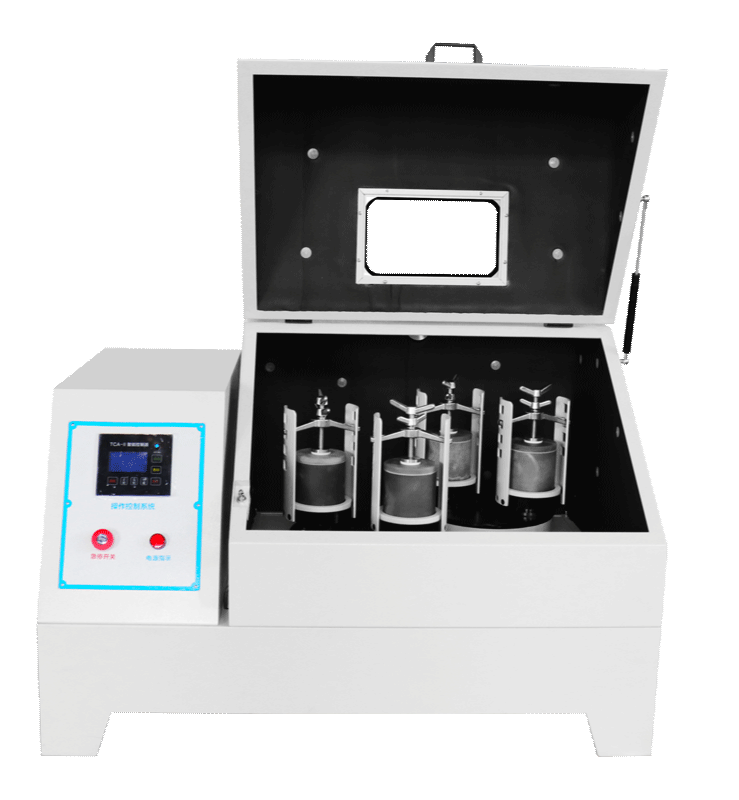
Discuss dual-planetary or ultrasonic-assisted systems for a defined process question. Dual-planetary describes a motion arrangement, not a universal two-jar count.
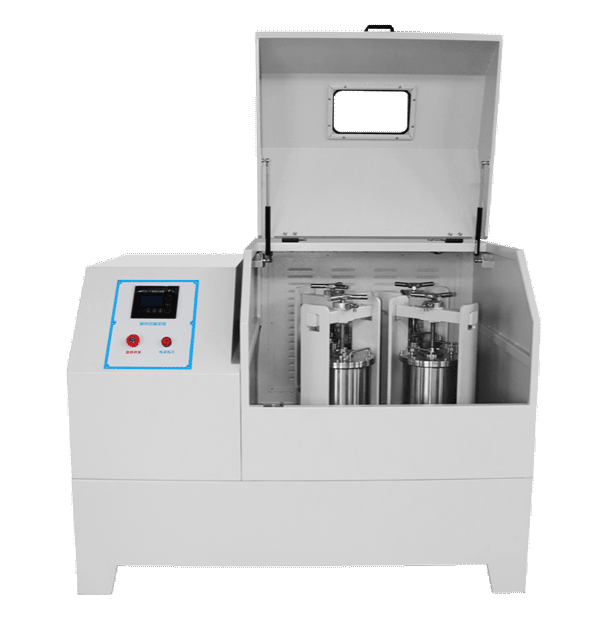
Check handling, loading, unloading, duty cycle, utilities and a representative scale-up trial. Do not scale rpm or grinding time by volume alone.
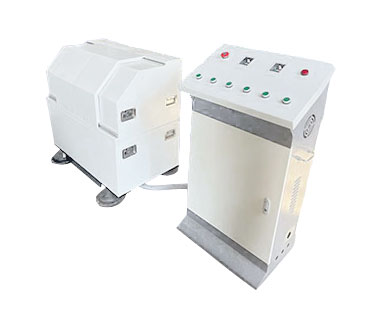
Define the feed behaviour, residence time, discharge and containment requirements. A continuous configuration is a different process from repeated batch runs.
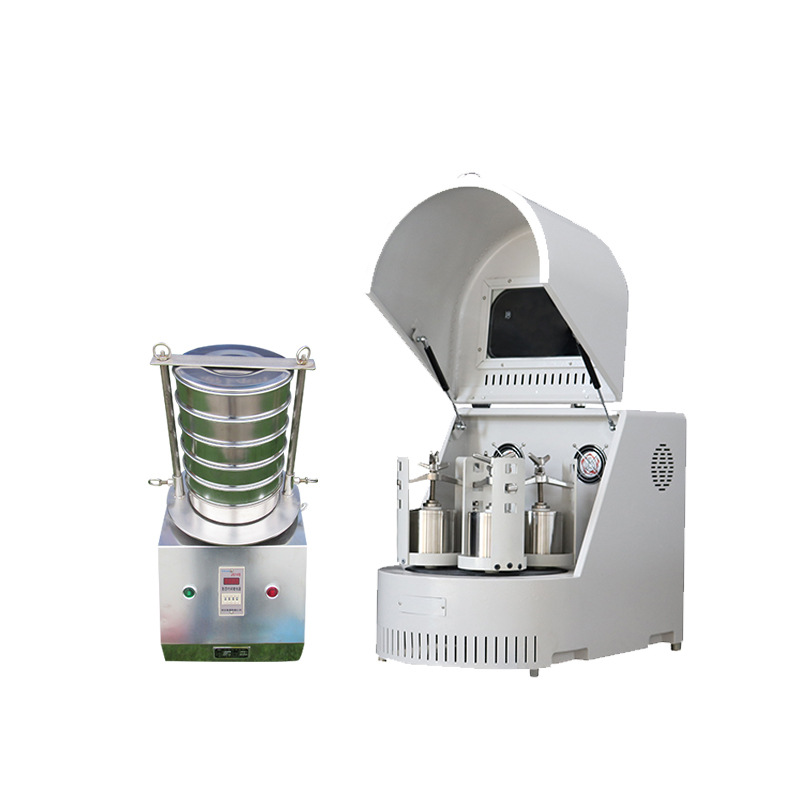
Include drying condition, sample representativeness, sieve size and cross-contamination control when selecting grinding and sieving equipment.
The liquid, atmosphere and thermal behaviour influence the jar, seals, operating schedule and downstream work.
A useful route when adding liquid is undesirable. Check dust handling, powder adhesion, heat generation and whether fine particles reagglomerate.
A liquid can improve dispersion for suitable materials. Its chemistry, concentration and viscosity must work with the jar, media and seals.
Name the maximum sample temperature and how it will be measured. Chamber air temperature does not by itself establish the powder temperature.
Specify the complete jar, lid, valves, seals and gas-handling procedure. Cooling and atmosphere protection solve different problems.
Heating, reactive samples, solvent processing and long-duration duty require an agreed configuration and operating procedure; they are not implied by a standard jar.
Choose the allowable wear chemistry, not just the hardest material. Compare jar materials, media and loading considerations.
Change one factor at a time and compare samples using the same measurement and dispersion method.
| Parameter | What it changes | What to evaluate |
|---|---|---|
| Speed and motion | Impact and friction within the selected jar system. | Disc versus jar rpm, material response and temperature. |
| Media size and distribution | Balance between breaking coarse particles and providing more contact points. | Feed size, target distribution, jar wear and separation. |
| Ball-to-powder ratio | Media mass relative to dry sample mass. | State the mass basis; assess load limits and temperature. |
| Charge volume | Space available for media and sample movement. | Media, sample and liquid together; interstitial volume is not simply additive. |
| Time and pauses | Accumulated exposure and heat dissipation. | Sampling intervals, useful size reduction and evidence of overprocessing. |
| Liquid and solids content | Flow, dispersion, recovery and chemistry. | Viscosity, compatibility, downstream processing and stability. |
An application name narrows the discussion. The actual sample and acceptance criteria determine the working setup.
Prioritize trace-element limits, moisture or oxygen sensitivity, particle-size distribution and retained material properties.
Evaluate abrasiveness, feed preparation, ceramic or metallic wear and representative sampling before choosing jar volume.
Discuss ductility, possible sticking, contamination and the intended structural change as well as the size measurement.
Include viscosity, solids content, dispersion stability and the required downstream liquid system.
Define acceptable heating, recovery, cleaning and whether a supported low-temperature process is necessary.
Plan matched samples, repeatability, cleaning between materials and a complete record of each configuration.
These existing anonymous trial records show why the sample and conditions matter. They are observations, not universal machine performance claims.
XQM · Dry milling
7.8 g sample · 250 mL jar
Sampling at 30 min
A 7.8 g powder sample was dry-milled with zirconia media in a 250 mL jar at recorded speed setting 450. The measurement was taken at 30 minutes; the exact XQM model and particle-size measurement method were not specified. The recorded D50 of 3.64 µm was below the requested 8 µm fineness target.
XQM-0.4A · Dry milling
155 g sample · 100 mL jar
Sampling at 120 min
The granular material was reduced in size before dry milling. The record identifies an XQM-0.4A, a 100 mL zirconia jar, zirconia media and a 155 g sample at speed setting 650. Media proportions are listed as large/medium/small 50/30/20; the proportion basis and measurement method are unspecified. The two-hour sample had D90 19.07 µm, below the recorded D90 fineness target of 50 µm.
QXQM · Dry milling
300 g sample · 500 mL jar
Sampling at 120 min
A 300 g powder sample was dry-milled in the recorded omnidirectional QXQM configuration using a 500 mL alumina jar and zirconia media. The speed setting was 480; D50 and D90 were recorded after two hours. The exact mill capacity and particle-size measurement method were not specified. The recorded D50 of 3.69 µm lies within the requested 2–7 µm range. This is a particle-size result, not a catalytic-performance test.
A useful brief helps our team compare the whole working system and plan a meaningful sample trial.
Composition, starting size, sample mass, bulk density, target distribution, measurement method and contamination limits.
Dry or wet method, liquid, temperature limit, atmosphere, jar material, media, parallel samples and cleaning requirements.
Voltage, frequency, phase, bench or floor space, handling arrangements, expected duty cycle and required documentation.
Check what is included in the quotation: machine, jars, media, adapters, cooling or gas accessories, operating documents and any agreed trial deliverables.
Resolve these points before comparing quotations.
Not on that basis. A nominal 4 L machine designation usually describes a jar configuration. Media, sample, liquid and movement space must be considered within each jar, together with the permitted total working mass.
No universal jar count should be assumed. The XQM-A and XQM compatibility tables here describe four-position systems. Check the exact arrangement and balancing requirements for every other family.
A material’s response, agglomeration, media, liquid and measurement method all affect the reported size. Agree the target distribution and verify it in a representative trial instead of relying on a generic fineness claim.
Speed is meaningful only with its reference axis, motion, jar geometry and load. Compare the useful result, wear, temperature and repeatability under defined conditions.
Treat scale-up as a new verification step. Jar dimensions, drive characteristics, media loading, heat transfer and handling change; the same rpm and time do not establish the same process.
Shortlist them together. A vacuum lid, dense media, a lined jar or a larger lid envelope can change the usable volume, holder fit and permitted load of the complete configuration.
Tell us what you are processing, how much you have and what a successful result looks like. We can review the mill, jar, media and trial conditions together.