
Skip to content
TENCANPLANETARY BALL MILLS

XQM production series

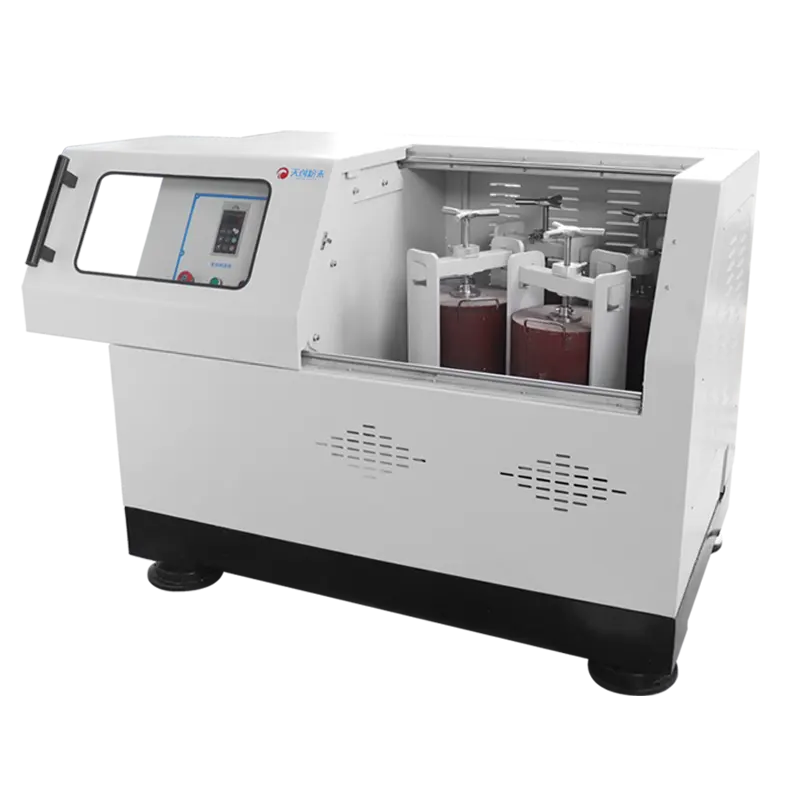
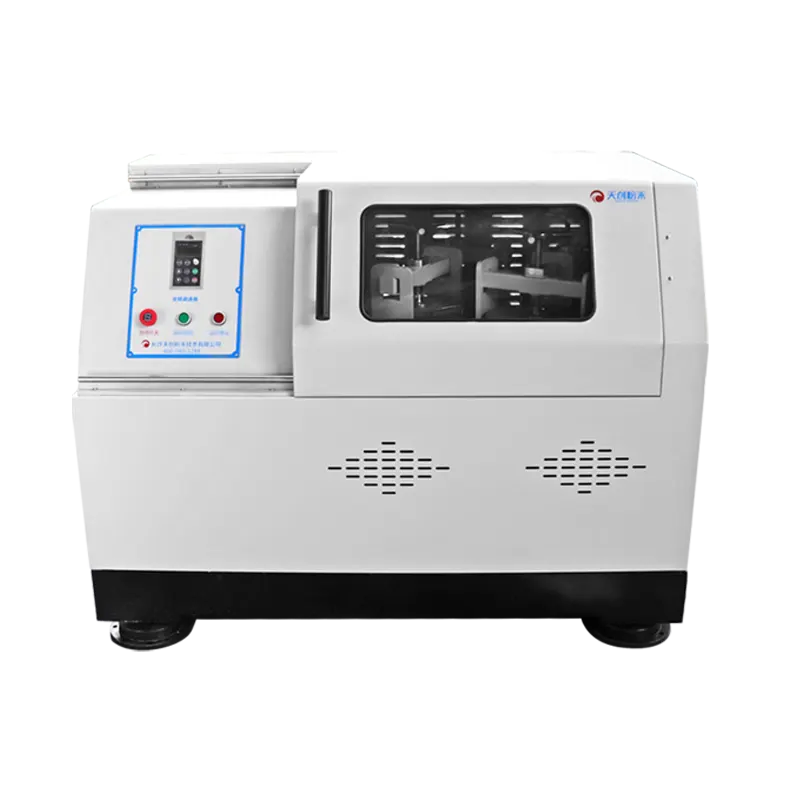
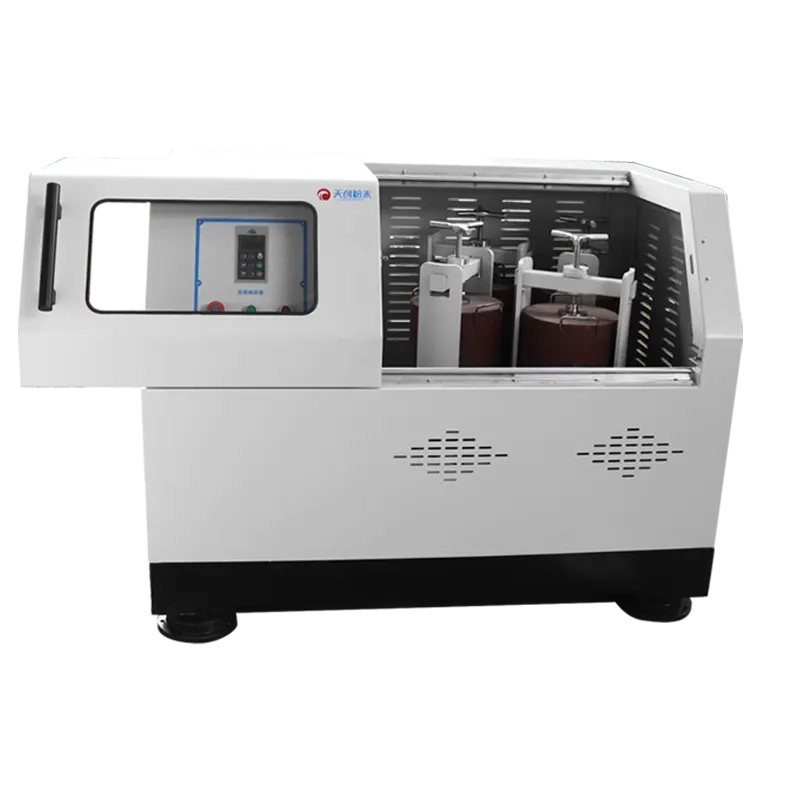
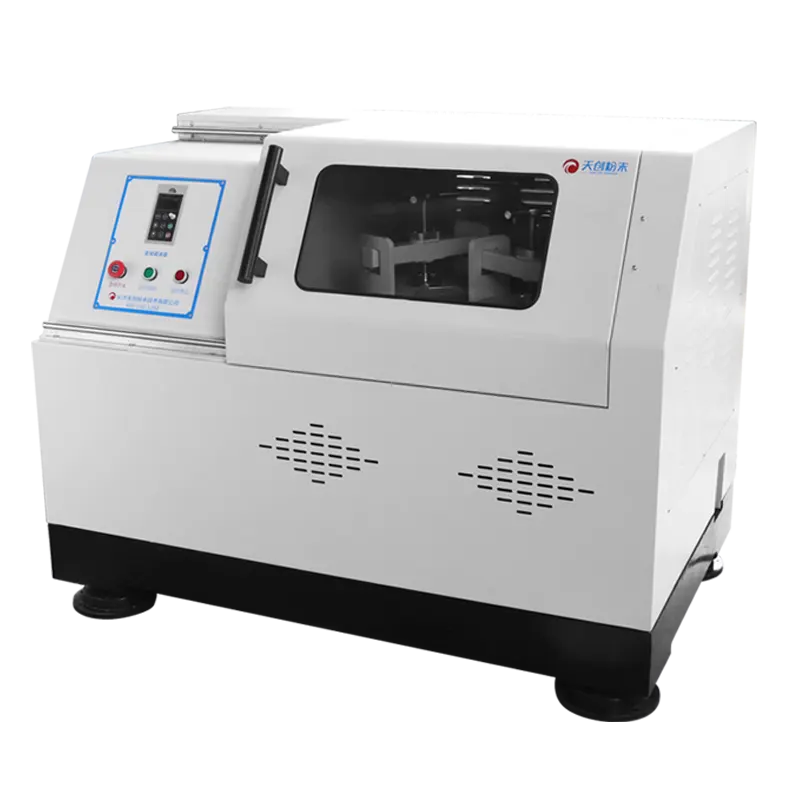
Vertical production planetary ball mill

A production-scale vertical planetary mill range for batch powder processing.

Overview

A production-scale vertical planetary mill range for batch powder processing. The published table covers XQM-20 to XQM-200, with model-specific jar volumes, drive power and installation dimensions.

How it works

The production range scales the revolving-disc and rotating-jar arrangement. Larger jars change the loaded mass, handling requirements and process behaviour, so scale-up needs more than a capacity ratio.

Key features

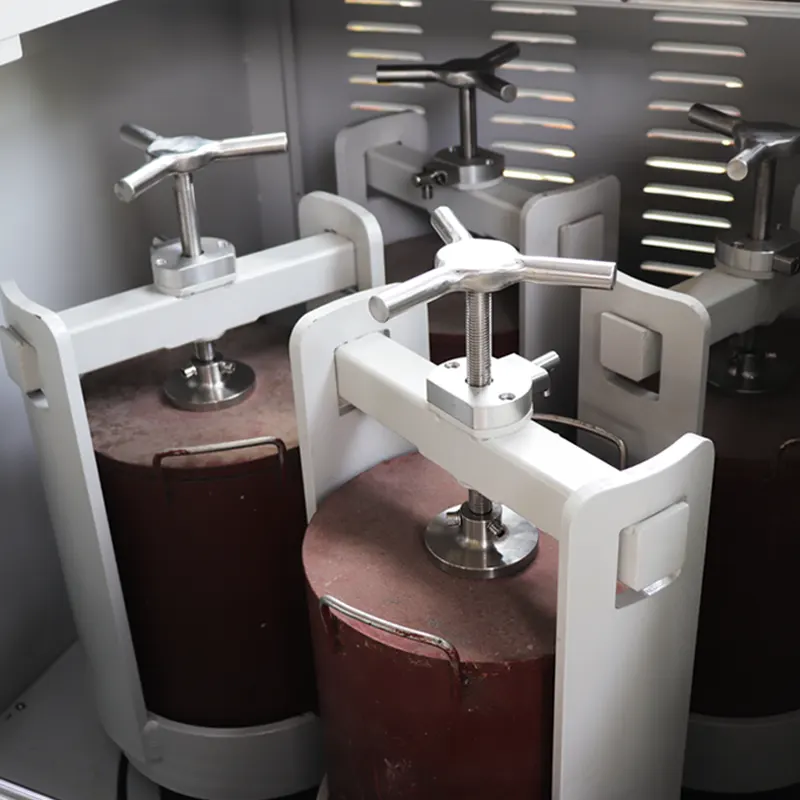
  • Four jar positions with standard and vacuum-jar options listed by model.
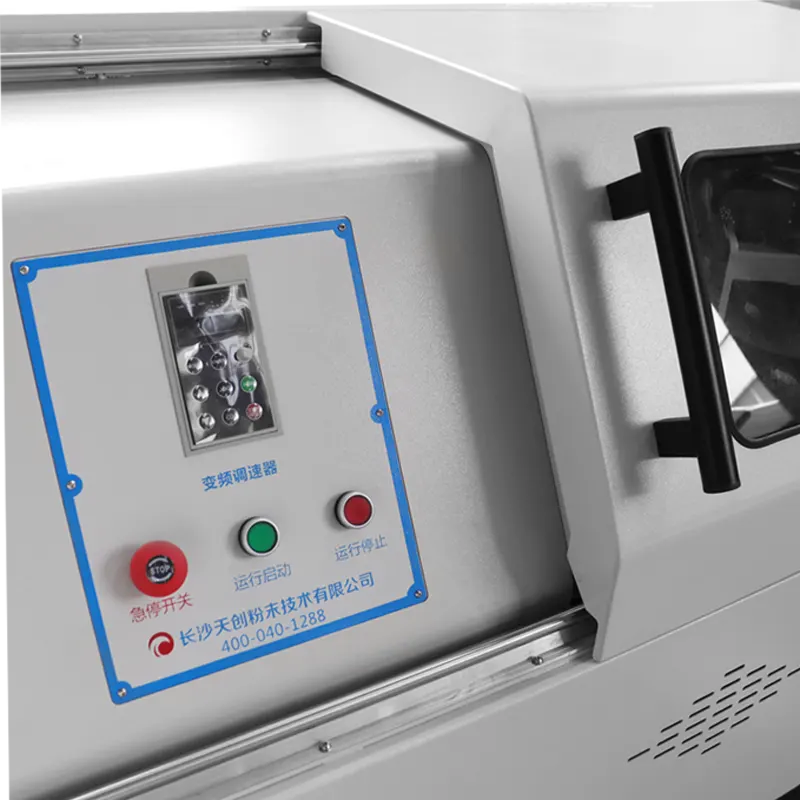
  • Published three-phase 380 V, 50 Hz references and touchscreen controls vary with model.
  • The supplied workbook contains an explicitly labelled XQM-40L trial with a 10 L jar and measured particle-size results.

Specifications

Published catalog references are reproduced below. Nominal volume is not a sample-mass rating. Confirm the selected model, material grade, electrical supply and complete supplied configuration in the quotation.

Model specifications — 1
ModelNominal capacityConfiguration classCompatible jar volumeJar positionsCompatible vacuum jar volume
XQM-2020LProduction2-5L42-4L vacuum jar
XQM-4040LProduction5-10L45L vacuum jar
XQM-6060LProduction10-15L410L vacuum jar
XQM-8080LProduction15-20L415L vacuum jar
XQM-100100LProduction20-25L420L vacuum jar
XQM-200200LProduction50L425L vacuum jar
Model specifications — 2
ModelMachine mass (kg)Dimensions (mm)
XQM-20392kg1200×790×930
XQM-40656kg1400×880×1070
XQM-60950kg1600×1070×1250
XQM-801300kg1750×1140×1330
XQM-1001300kg1800×1150×1140
XQM-2002725kg2670×1600×2804
Model specifications — 3
ModelElectrical supplySupply phaseMotor power (kW)Speed controlProgrammable run time (min)
XQM-20380V 50HzThree phase4kWTouchscreen1-9999
XQM-40380V 50HzThree phase5.5kWTouchscreen1-9999
XQM-60380V 50HzThree phase7.5kWTouchscreen1-9999
XQM-80380V 50HzThree phase11kWTouchscreen1-9999
XQM-100380V 50HzThree phase11kWTouchscreen1-9999
XQM-200380V 50HzThree phase22kWTouchscreen1-9999
Model specifications — 4
ModelReversing interval (min)Planetary disc speed (rpm)Jar rotation speed (rpm)Revolution : rotation ratioPublished noise level (dB)
XQM-201-9990-2150-4301:265±5
XQM-401-9990-1950-3901:268±5
XQM-601-9990-1740-2601:1.568±5
XQM-801-9990-1610-2421:1.568±5
XQM-1001-9990-1610-2421:1.568±5
XQM-2001-9990-1430-2151:1.568±5

Applications

Batch process development, pilot-to-production transfer and production powder grinding.

Suitability depends on the actual sample, process and analytical requirements; a listed application is not a guaranteed final-particle-size result.

Accessories and options

Discuss jar and media materials, vacuum/inert-gas arrangements, loading and unloading needs, cooling requirements and the required control interface. The scope of each item belongs in the quotation.

  • Jar and media: confirm material, volume, holder fit and the complete working load.
  • Vacuum or gas requirements: specify the complete jar, lid and seal arrangement; no pressure rating is assumed.
  • Utilities and supply scope: state voltage, frequency, phase, destination and required documents; confirm included versus optional items.

Compare milling jars · Compare grinding media · Low temperature planetary grinding machines · Ultrasonic planetary ball mills

Selection guidance

Define mass per batch, cycle requirements, jar handling and the electrical/installation conditions. Use trial data to assess the process rather than assigning a guaranteed hourly output from jar capacity.

Work through the selection guide · Request a configuration quotation

Trials and comparisons

Explicit model record

Glass powder

XQM-40L · Wet milling

  • Sample: 2400 g
  • Jar: 10 L black nylon jar
  • Recorded sampling / duration: 8 h
Recorded observations
ObservationD50 (µm)D90 (µm)D97 (µm)
Recorded sample0.956.7366.61

The product information labels XQM-40L or XQM-200L. Records are individual procedures, not a production-output guarantee. This is an explicitly labelled XQM-40L record. The nylon formulation and media grade are unspecified. D97 66.61 µm does not support the requested condition that every particle be below 10 µm. No production-throughput or coating-quality conclusion follows.

Explicit model record

Stainless-steel powder

XQM-200L · Vacuum / argon procedure recorded

  • Sample: 7500 g
  • Jar: 50 L stainless-steel vacuum jar
  • Recorded sampling / duration: 80 h recorded
Recorded observations
Recorded itemValue
Sample mass7.5 kg
Media charge75 kg steel media
Recorded media : sample mass ratio10 : 1
Recorded processing duration80 h

The product information labels XQM-40L or XQM-200L. Records are individual procedures, not a production-output guarantee. No particle-size, oxygen, pressure or purity result is reported. The specific steel designation in the product information is ambiguous and is not repeated as a verified alloy grade. This large-jar procedure does not identify a current catalog jar part number or pressure rating.

How to plan a fair comparison

For scale-up, document jar and media loading, sample properties, processing schedule and the same particle-size measurement method. The workbook’s XQM-40L glass result is an individual batch observation, not a production guarantee.

These anonymous records are not operating instructions. Measurement and dispersion methods are not fully specified in the test summaries; results apply to the reported samples and conditions.

Discuss a matched sample evaluation

Product FAQs

Can a low D50 be used to claim that every particle meets the target?

No. In the recorded XQM-40L glass trial, D50 was 0.95 µm but D97 was 66.61 µm. These measurements do not establish the requested condition that all particles were below 10 µm.

How should I select the XQM production series configuration?

Define mass per batch, cycle requirements, jar handling and the electrical/installation conditions. Use trial data to assess the process rather than assigning a guaranteed hourly output from jar capacity. Four jar positions with standard and vacuum-jar options listed by model. Nominal mill capacity is not the usable sample mass; account for media and working space.

Which jars and grinding media should I request for this mill?

XQM-20 through XQM-200 use different jar volumes and loaded masses. The table lists standard and vacuum-jar references separately. Choose the jar working material and media around sample chemistry and contamination limits; confirm the complete loaded mass.

Are cooling and ultrasonic equipment included?

Discuss jar and media materials, vacuum/inert-gas arrangements, loading and unloading needs, cooling requirements and the required control interface. The scope of each item belongs in the quotation. Optional equipment is included only when it is explicitly listed in the agreed configuration and quotation.

What trial evidence is available for this mill?

Glass powder: XQM-40L, 2400 g in 10 L black nylon jar, 8 h. The product information labels XQM-40L or XQM-200L. Records are individual procedures, not a production-output guarantee. This is an explicitly labelled XQM-40L record. The nylon formulation and media grade are unspecified. D97 66.61 µm does not support the requested condition that every particle be below 10 µm. No production-throughput or coating-quality conclusion follows. A free sample-grinding application can be reviewed by TENCAN engineers.

What should I include in an export quotation request?

Specify XQM production series, sample and jar requirements, destination, mains voltage, frequency and phase. Define mass per batch, cycle requirements, jar handling and the electrical/installation conditions. Use trial data to assess the process rather than assigning a guaranteed hourly output from jar capacity. Confirm included accessories, packing, required documents, commercial terms and lead time in the quotation.

Start with your sample.

Nominal capacity, jar volume and usable sample load are different. Confirm the model, jars and electrical requirements with our engineers.

Choosing a Planetary MillChoosing Jars and Grinding Media

WILL IT WORK
FOR YOUR MATERIAL?

Plan a sample evaluation with our engineers.

Request free sample grinding

Discuss your project.

Tell us about your material, equipment or service needs.