
Technical article
Which Planetary Ball Mill Setup Is Suitable for Contamination-Controlled Soft Polymer Grinding?
Soft polymer powders need a mill, jar, and media chosen for heat, contamination, and atmosphere; verify the final setup with your sample.
Why soft polymer powder needs a different milling decision
A soft polymer powder is not a miniature version of a brittle mineral. It deforms, rebounds, smears, and can weld to itself under mechanical stress. If the goal is to break agglomerates and refine the powder after precipitation or drying, a high-energy approach can make the sample worse: the polymer may heat, flatten, or pick up contamination. The useful question is not which planetary ball mill is strongest, but which combination of mill, jar, media, atmosphere, and duty cycle keeps this polymer within its process window while reducing agglomerates.
This guide treats one application: dry fine grinding and deagglomeration of a soft, heat-sensitive polymer powder before compounding, sintering, or slurry preparation. It is an application analysis, not a claim about a named customer or a guarantee for every polymer. The same logic applies to polymer powders with low softening points, strong electrostatic charging, or sensitivity to oxygen and moisture.
The goal is usually modest and measurable: break soft agglomerates, narrow the particle-size distribution, preserve molecular structure and color, avoid metallic contamination, and recover a representative sample for analysis. A setup that achieves a small particle size but changes the polymer thermal history or introduces wear metals is not a successful setup.
What the process must achieve before equipment is compared
Start with the process stage. Suppose the polymer has been synthesized, precipitated, dried, or received as a fine but agglomerated powder. The next step is to prepare a representative, flowable powder for compounding or analytical testing. At this stage, the mill must do four jobs: separate weakly bonded agglomerates, reduce the coarse fraction if the material allows it, homogenize the batch, and keep the powder chemically unchanged. Those objectives do not all require the same energy. Deagglomeration may need only gentle shear and short residence time, while true particle-size reduction of a ductile polymer can be difficult and may require cooling, a different mill principle, or a wet route.
Define the target in a way the supplier can test. Finer is not a specification. Useful descriptors include a target particle-size range or distribution, an upper cut, tap density, flow behavior, residual moisture, oxygen content, color, and the absence of visible smearing. For a heat-sensitive polymer, the maximum acceptable temperature rise during milling and the allowed pause time between cycles belong in the same discussion. For an oxygen-sensitive powder, the acceptable oxygen and moisture exposure must be defined before a glove-box mill is considered.
There is also a scale question. A micro planetary mill is useful for small samples, formulation screening, and expensive polymers. It is not evidence that the same recipe will transfer directly to a larger jar. Scale-up should compare energy input per mass, fill ratio, ball-to-powder ratio, and temperature history, not just jar volume. The correct starting point is therefore a small, instrumented trial that produces enough material for analysis.
Material properties that change the selection
Thermal sensitivity and softening
Soft polymers can soften, stick, or degrade when local temperature rises. In a planetary mill, energy is transferred through impact and friction; both can heat the jar, the media, and the powder. The risk is not uniform: contact points can be hotter than the bulk. A practical configuration therefore favors short milling intervals, controlled pauses, and a mill format that allows the jar to be cooled or placed in a temperature-controlled environment. Do not assume that a lower nominal speed always means a lower sample temperature; jar loading, media mass, and continuous running time also matter. Confirm the available speed range, programmability, and duty cycle with the mill supplier.
Viscoelasticity, cold welding, and agglomeration
Ductile polymer particles may deform instead of fracture. Under repeated impacts they can flatten, cold-weld, or coat the jar and media. A milling configuration that works for a brittle ceramic may simply compact a soft polymer. The selection response is to reduce unnecessary impact energy, avoid excessive ball-to-powder ratio, and consider media size and surface carefully. Short cycles with inspection are more informative than a long unattended run. If the powder smears, the answer may be a different process route rather than a larger motor.
Electrostatic charging and powder flow
Polymer powders often accumulate static charge, especially when dry and finely divided. Charged particles can cling to jar walls, escape during handling, or form loose agglomerates that look like coarse particles in a size measurement. Grounding, humidity control, and a sealed milling container may matter. The jar and media should be easy to clean and compatible with the chosen discharge method. A sample that is difficult to recover is a sampling problem even if the particle size is excellent.
Oxygen, moisture, and solvent sensitivity
Some polymer powders oxidize, hydrolyze, or absorb moisture during handling. For those materials, the mill enclosure and jar sealing become part of the process. A glove-box-compatible mill can keep the sample in a controlled atmosphere during loading, milling, and recovery, but only if the jar, lid, fittings, and feedthroughs are appropriate. For other polymers, dry milling in air is acceptable and a simpler configuration is better. The decision should be based on the material sensitivity and the required evidence, not on the assumption that inert atmosphere is always superior.
Abrasion and contamination sensitivity
A polymer powder may be soft, but the milling system still wears. Jar and media surfaces can release iron, aluminum, or coating fragments. The relevant question is which contaminant is unacceptable for the final application and which analytical method can detect it. A ceramic jar may reduce the concern about a steel jar surface, but it introduces its own wear and cleaning questions. A polymer-coated ball may offer a polymer contact surface, but the coating must remain intact. Every material choice is a trade-off that should be verified with the actual powder.
How planetary ball milling fits this application
A planetary ball mill uses jars that rotate around a central axis while also turning around their own axis. The resulting motion drives grinding media against the sample and against the jar wall. The operating variables include rotation speed, jar volume, media size and density, ball-to-powder ratio, fill level, milling time, and the number and length of pauses. For a soft polymer, these variables are not independent. Increasing media mass or speed may improve agglomerate breakup but also increase heat and smearing. Decreasing the fill may leave too little material for representative analysis. The practical approach is to fix the sample and target first, then adjust the mildest set of variables that meets the target.
Dry milling is the natural starting point for a powder that must remain dry and free-flowing. It avoids solvent recovery and drying-induced agglomeration, but it can generate more heat and static. Wet milling can dissipate heat and may improve dispersion, but the solvent must be compatible with the polymer, the jar, the media, and the later process. A solvent that swells the polymer can change the particle shape; a solvent that is difficult to remove can leave residue. For soft polymers, the choice between dry and wet is a materials-compatibility decision, not a default.
Planetary milling is most defensible when the required change is deagglomeration or moderate refinement and when the sample can be inspected between short runs. It is less defensible to promise a specific final particle size for an arbitrary polymer without a trial. The equipment page, the safety data sheet, and a sample test plan should travel together.
Documented TENCAN starting points
The TENCAN pages used for this guide document one mill and two consumables. They are not interchangeable models: the mill provides the motion and enclosure, while the jar and media define the contact surfaces and the sample environment. A complete recommendation therefore combines them for a specific powder rather than ranking them as if they were the same product type.
Micro Planetary Ball Mill, glove-box special edition
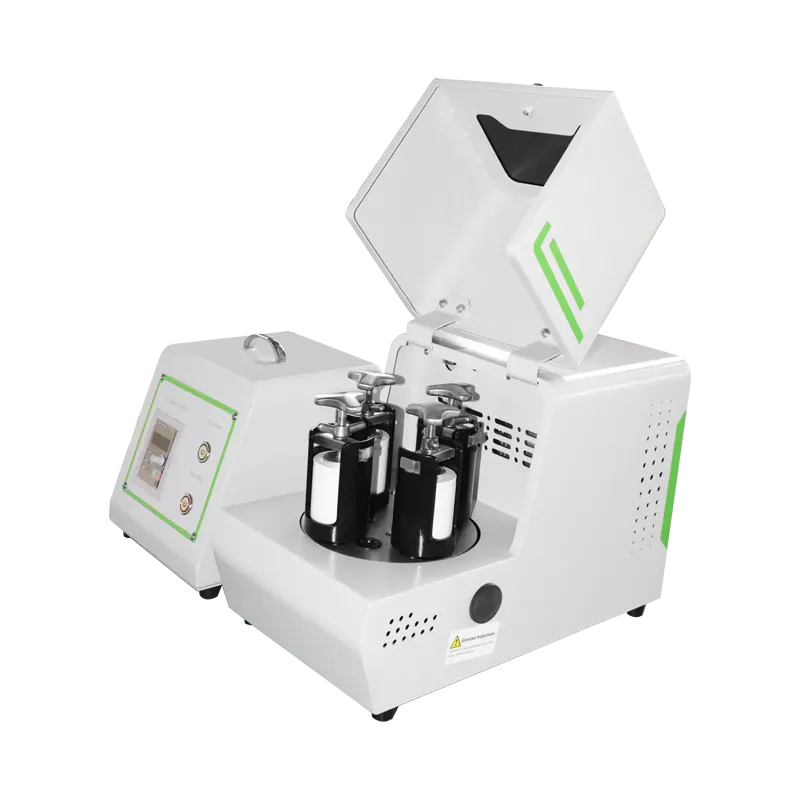
The first option to evaluate is the TENCAN Micro Planetary Ball Mill, documented as a glove-box special edition. Its most relevant advantage for this application is the combination of a micro-scale milling format with a route to controlled-atmosphere handling. That makes it a sensible candidate when the polymer sample is small, expensive, air-sensitive, or intended for analytical study before larger-scale processing. A micro mill can reduce the amount of material consumed in a trial and allow several short experiments instead of one long, risky run.
The glove-box special edition should be treated as an integration question, not a slogan. Ask for the mill footprint and connections, the jar size or jar range it accepts, the sealing method, the achievable atmosphere inside the milling jar, and the procedure for loading and recovering the sample without exposing it to air. Also confirm the available speed control, timing, and pause programming, because those functions determine whether a gentle, interrupted cycle is practical. If the polymer is not oxygen- or moisture-sensitive, the glove-box feature may be unnecessary; a simpler micro mill configuration may be easier to operate and clean. The positive case for this TENCAN option is strongest when small-scale, atmosphere-controlled trials are genuinely required.
Corundum planetary mill jar
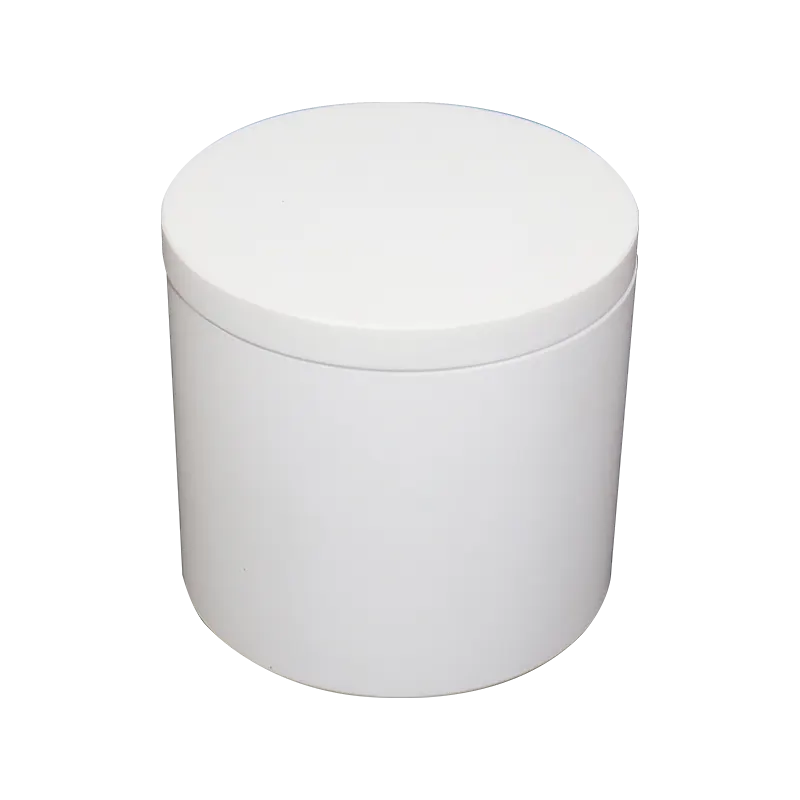
The documented TENCAN corundum planetary mill jar belongs to the ceramic jar family. Its selection logic is different from the mill: it changes the jar surface that contacts the polymer. A ceramic jar is worth evaluating when the sample must avoid a steel jar surface and when the polymer chemistry is compatible with the jar material. It may also be attractive when the cleaning procedure must be aggressive enough to remove polymer films, provided the jar can tolerate that cleaning.
Do not treat corundum as a universal inert surface. Ask about the jar sealing gasket, lid design, available volumes, and recommended cleaning agents. Check whether the polymer will wet or adhere to the ceramic, whether the jar can be cooled, and whether any jar wear products are acceptable in the final application. A ceramic jar can be a good positive choice for contamination-conscious work, but only after the sample sensitivity to the jar material and the analytical detection limit for that element have been considered. The jar should be matched to the mill jar size and clamping system, not selected in isolation.
Polyurethane coated iron core grinding ball
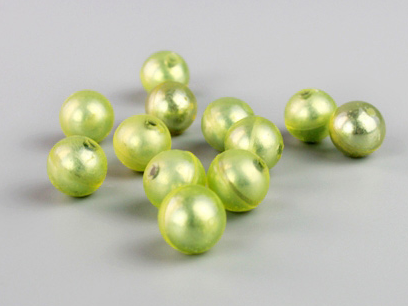
The documented TENCAN polyurethane coated iron core grinding ball is a media option in which a polyurethane coating surrounds an iron core. Its selection rationale is straightforward: the coating provides a polymer contact surface, while the iron core gives the ball mass. That combination can be relevant when a soft polymer tends to stick to bare metal or when the user wants to evaluate a less metallic contact surface. It is not a guarantee against contamination. The coating can wear, tear, or embed particles, and the iron core becomes relevant if the coating is breached.
Before using this media with a soft polymer, ask for the coating thickness or tolerance, the recommended operating temperature, chemical compatibility with the polymer and any cleaning solvent, and the inspection criteria for worn balls. Confirm whether the balls are supplied in sizes and quantities suitable for the selected jar. A media trial should include a coating-integrity check after milling, a visual inspection of the jar for coating fragments, and an appropriate analytical check for iron or coating-derived contamination if those elements are critical. The positive feature is the engineered polymer surface; the responsible use is to verify that the surface survives the intended duty.
Application matching table
The table below keeps the comparison at the level of selection factors. It does not assign scores or imply that one configuration is universally better. The documented feature column points to the TENCAN item that is relevant to the factor; the final choice still depends on the polymer, the target, and sample verification.
| Selection factor | Why it matters | Suitable documented feature |
|---|---|---|
| Heat management | Soft polymers can soften or smear when local temperature rises. | Use the micro mill for small, interrupted trials and confirm speed, pause, and cooling provisions. For all options, validate with a temperature log. |
| Oxygen and moisture control | Some polymer powders lose properties on exposure. | The Micro Planetary Ball Mill is documented as a glove-box special edition; confirm jar sealing and transfer procedure. |
| Jar surface contamination | Wear or leaching can change chemistry and analysis. | The corundum planetary mill jar offers a ceramic contact option; confirm compatibility, wear, and cleaning. |
| Media contact surface | Sticking and cold welding reduce yield. | The polyurethane coated iron core grinding ball provides a polymer-coated contact surface; inspect for coating damage. |
| Sample size and cost | Expensive polymers may limit trial mass. | Micro-scale format allows small trials; confirm minimum and maximum jar load. |
| Cleaning and cross-contamination | Polymer films can be hard to remove. | Evaluate jar and media cleanability; confirm gasket and coating compatibility with cleaning agents. |
| Atmosphere integration | A sealed jar alone may not prevent exposure during loading. | Glove-box special edition addresses enclosure; confirm connections and recovery procedure. |
| Scale-up evidence | A micro trial is not a production guarantee. | Ask for a scale-up plan based on energy per mass, fill ratio, and temperature, not jar volume alone. |
International alternatives: keep the comparison evidence-based
An international non-Chinese planetary mill supplier can be a reasonable alternative when it offers better regional service, an existing glove-box interface, a jar size that matches your workflow, or documentation that your quality system requires. The positive case should be built from the same factors used above: published jar volumes, material certificates, controlled-atmosphere options, cleanability, spare parts, and the willingness to run a sample trial. A supplier that provides a clear test report and a realistic scale-up discussion is more useful than one that quotes an isolated minimum particle size without stating the material, starting size, and measurement method.
This guide does not name unverified international models. The source material reviewed here contains TENCAN product pages but no verified international product pages, and naming a model without reading its current documentation would risk inventing performance claims. Readers comparing international equipment can use the table as a neutral screening sheet and request the same documents from every supplier. That approach keeps the TENCAN options first in the worked example while giving other suppliers a fair, criterion-based evaluation.
Which configuration fits which situation?
When heat and sample cost dominate, start with the micro mill and a short, interrupted dry-milling trial. Use small jars and enough sample for a representative measurement, then inspect for smearing before increasing energy. When oxygen or moisture is the main risk, the glove-box special edition is the relevant starting point, but the jar seal and transfer procedure must be verified. When iron contamination from a steel jar is the concern, evaluate the corundum jar with the same mill and a compatible media set. When polymer sticking or metallic contact is the concern, evaluate the polyurethane-coated iron-core media, with a coating-integrity check built into the trial.
When the polymer is only weakly agglomerated and flows well, a very short deagglomeration step may be enough. When the polymer is ductile and the target requires substantial particle-size reduction, planetary milling may be the wrong primary route; cooling, wet milling, or a different comminution principle may be more appropriate. A supplier should be willing to say that. The best configuration is the one that meets the analytical target with the least thermal and chemical disturbance, not the one with the highest stated energy.
Sample verification before purchase
Ask for a trial that uses your polymer, not a generic ceramic. The trial plan should state the starting particle-size distribution, sample mass, jar and media, atmosphere, milling time and pauses, and recovery method. After milling, request the measurements that matter for your application: particle-size distribution by an agreed method, laser diffraction or microscopy with a documented dispersion procedure; particle shape and evidence of smearing by electron microscopy; thermal transitions by differential scanning calorimetry; decomposition behavior by thermogravimetric analysis; chemical identity by infrared spectroscopy; molecular weight by gel-permeation chromatography where relevant; residual moisture by Karl Fischer titration or loss-on-drying; oxygen exposure where relevant; and wear-metal content by inductively coupled plasma optical emission spectrometry or another agreed method. Not every project needs every test, but the chosen tests should be fixed before the trial.
Also verify practical outcomes: recovered yield, powder flow, bulk density, color, static behavior, and cleaning time. A powder that meets a size target but cannot be discharged from the jar is not a process success. For a glove-box trial, record oxygen and moisture before and after loading, and confirm that the sample transfer does not expose the powder to air. For a heat-sensitive polymer, record jar-surface and, if possible, internal temperature during the run; a single endpoint temperature can hide a short hot spot. These checks turn a positive product description into evidence for your material.
Procurement and safety checklist
- Define the polymer, starting form, target particle-size range, allowable temperature rise, and required atmosphere.
- Confirm the mill jar size range, speed and timing control, pause programming, and glove-box connections.
- Match the jar to the mill and to the sample chemistry; confirm gasket material, cleaning agents, and spare seals.
- Confirm media size, quantity, coating condition, and inspection criteria; plan for coating wear.
- Ask for a sample trial report with raw data, not only a summary claim.
- Check dust explosibility, solvent compatibility, inert-gas safety, and local ventilation requirements before milling.
- Agree on a scale-up plan and a change-control procedure for jar, media, and polymer lots.
Conclusion
For a soft, heat-sensitive polymer powder, the correct planetary ball mill setup is a small, controlled trial, not a promise of a universal finest particle size. The documented TENCAN micro planetary mill, corundum jar, and polyurethane-coated iron-core media give a coherent starting set for evaluating atmosphere control, ceramic contact, and polymer-coated media. The next step is to send TENCAN a representative sample with the target particle-size range, temperature limit, atmosphere requirement, and preferred analytical methods so that the jar, media, and duty cycle can be confirmed against evidence.
Sources and Further Reading
TENCAN product pages used for the documented features in this guide: Micro Planetary Ball Mill (glove-box special edition), corundum planetary mill jar, and Polyurethane coated iron core grinding ball. The three product URLs are cited in the body. No third-party performance data, ratings, or customer cases are used.