
Skip to content
TENCANPLANETARY BALL MILLS

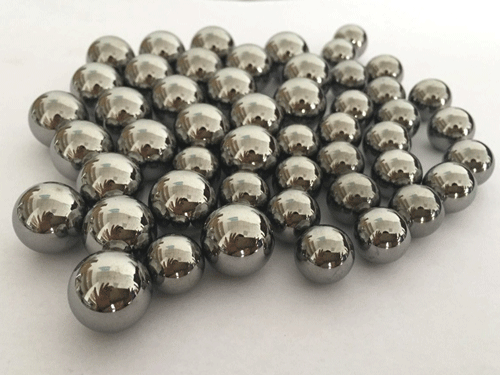
Tungsten Carbide Grinding Balls

High-density cemented-carbide grinding balls for evaluating hard materials and demanding powder-processing applications.

Overview

High-density cemented-carbide grinding balls for evaluating hard materials and demanding powder-processing applications. Their high mass per unit volume makes jar and drive loading especially important.

How it works

The grinding media forms part of the contact system between sample, media and mill. Material selection should balance the required mechanical action with chemical compatibility and the acceptable contribution from wear.

Wear can introduce tungsten and binder constituents. Hardness does not mean that the balls are wear-free or compatible with every jar.

Key features

  • The published reference diameter range is 1–30 mm.
  • The catalog lists material density and HRA hardness references.
  • Specify the binder grade and evaluate wear with the actual sample and jar.

Specifications

Published catalog references are reproduced below. Nominal volume is not a sample-mass rating. Confirm the selected model, material grade, electrical supply and complete supplied configuration in the quotation.

Published media material references
PropertyReference
Materialcemented tungsten carbide
Composition / gradeSintered WC with a metallic binder; confirm cobalt/binder grade
Diameter range1–30 mm
Density14.5–15.0 g/cm³ (published grade reference)
HardnessHRA 88–93
Supplied size distributionSpecify the required diameters and quantities
Grade / batch documentationConfirm with the quotation; material references are not a batch certificate

Material properties are published references, not a certificate for a supplied batch or a complete assembly temperature/pressure rating.

Applications

Compatible carbide, hard-mineral and high-value powder-processing studies.

Suitability depends on the actual sample, process and analytical requirements; a listed application is not a guaranteed final-particle-size result.

Accessories and options

Specify the media grade, diameter mix, total charge and required documentation against the actual jar and sample. Confirm custom requirements in the quotation.

State the required grade, quantities, drawings and destination when requesting a quotation. Confirm what is included, the document requirements, packing and commercial terms; no generic delivery time or universal custom capability is assumed.

Compare milling jars · Compare grinding media · Air-cooled systems · Ultrasonic-assisted systems

Selection guidance

Match cemented tungsten carbide to the sample chemistry and the elements or residues that matter to the analysis. Then confirm the dimensions, complete loaded mass and operating arrangement against the selected mill.

Work through the selection guide · Request a configuration quotation

Trials and comparisons

Material/application reference

Pyroxene mineral

XQM; exact model not recorded · Dry milling with carbide jar/media

  • Sample: 238 g
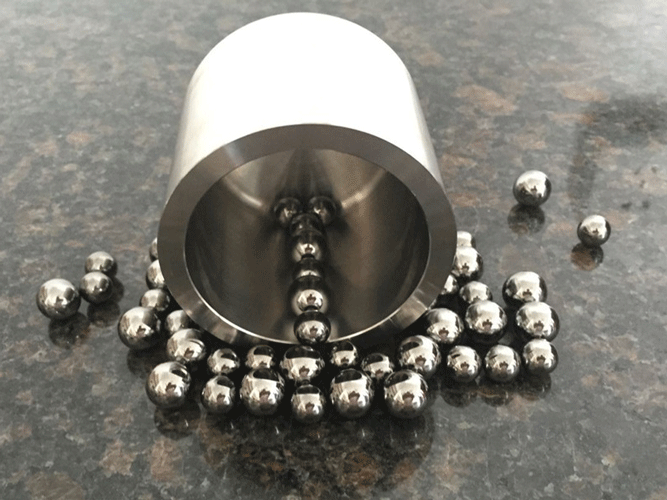
  • Jar: 500 mL cemented-carbide jar
  • Recorded sampling / duration: 30 min
Recorded observations
ObservationSampling timeD50 (µm)D90 (µm)
Carbide-jar sample30 min7.6328.00

Severe settling/caking was recorded. An earlier steel-jar run used a different charge and a separately received sample, so it is not a controlled carbide-versus-steel comparison. Carbide/binder grade and jar part number were not recorded.

How to plan a fair comparison

For a cemented tungsten carbide comparison, use matched sample portions and the same measurement/dispersion method. State the jar, media, mass/volume loading basis, processing schedule and contamination measurements. A change in material grade alone is not established as the cause of a result.

These anonymous records are not operating instructions. Measurement and dispersion methods are not fully specified in the test summaries; results apply to the reported samples and conditions.

Discuss a matched sample evaluation

Product FAQs

Does very high hardness remove contamination risk?

No. Wear and binder transfer still need assessment. Specify elemental limits, the jar material and the actual carbide/binder grade before using the media for a sensitive sample.

Which cemented tungsten carbide ball diameter should I order?

The catalog diameter reference is 1–30 mm. Select diameters and the size mix around feed size, target result, jar volume and the chosen process. Wear can introduce tungsten and binder constituents. Hardness does not mean that the balls are wear-free or compatible with every jar.

Can these balls replace another media material at the same mass?

The density reference for cemented tungsten carbide is 14.5–15.0 g/cm³ (published grade reference). Equal mass does not give equal media volume when densities differ. Define the loading basis and review the total jar load before changing materials.

How should these balls be matched to a jar?

Check the jar working surface, media hardness/density, total loaded mass and sample chemistry. Wear can introduce tungsten and binder constituents. Hardness does not mean that the balls are wear-free or compatible with every jar. A diameter that fits physically is not automatically an appropriate process choice.

Does the hardness value establish wear performance in my sample?

The published hardness reference is HRA 88–93. Wear can introduce tungsten and binder constituents. Hardness does not mean that the balls are wear-free or compatible with every jar. Assess wear with the actual sample, jar, loading and measurement method; hardness is not a sample-specific wear-rate result.

What grade and size information should I include in an inquiry?

Specify Sintered WC with a metallic binder; confirm cobalt/binder grade, diameters within the 1–30 mm catalog reference, quantities and required grade/batch documents. Provide the actual jar, sample chemistry and contamination limits so TENCAN can review the pairing.

Start with your sample.

Nominal capacity, jar volume and usable sample load are different. Confirm the model, jars and electrical requirements with our engineers.

Choosing Jars and Grinding Media

WILL IT WORK
FOR YOUR MATERIAL?

Plan a sample evaluation with our engineers.

Request free sample grinding

Discuss your project.

Tell us about your material, equipment or service needs.