
Technical article
TENCAN Continuous Planetary Ball Mill: International Selection Guide
Match a TENCAN continuous planetary mill, agate jars and coated media to wet-grinding duty with like-for-like international checks.
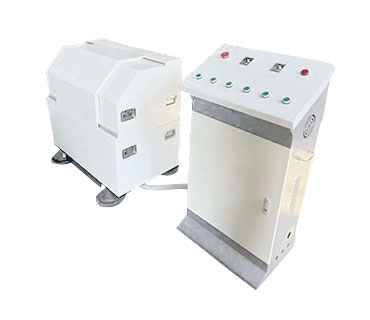
Continuous planetary ball milling is a scale-up decision, not a larger batch experiment. In batch work the operator can stop, open the jar and inspect the result; in continuous duty, material moves while the mill runs, so feed consistency, residence time, discharge, cleaning and sample contact all become part of the method. A shortlist built only on brand names is therefore weak. The useful comparison is between documented configurations that can meet the same duty.
This guide uses three TENCAN listings as its documented starting point: the continuous planetary ball mill, the agate planetary mill jar and the polyurethane coated iron core grinding ball. Together they cover the machine, the jar and the media, which are the three decisions that most often change the outcome of a milling trial. The guide compares TENCAN's published focus with the questions a buyer should put to any international continuous-mill supplier. It is a procurement framework, not a laboratory ranking, and it does not assign third-party scores.
Why continuous operation changes the selection question
A planetary mill uses rotating jars to impart motion to the charge. The word continuous changes the commercial and technical questions. Instead of asking only for jar volume, the buyer must ask how material enters, how long it stays, how it leaves, how the line is cleaned between products, and how the feed is kept uniform. These questions matter for a single pilot campaign and for a repeatable production step. They also matter when comparing quotations: a batch mill is not a like-for-like substitute for a continuous unit if the process requires steady flow.
For any continuous mill, including TENCAN's, the same duty data should be requested: target throughput, acceptable residence-time range, solids loading, liquid phase, feed particle-size range, target particle-size range, temperature limits, atmosphere, cleaning regime and documentation. Without those inputs, a model number is only a label. With them, the mill, jar and media can be evaluated as one system.
- Feed: describe the as-received material, pre-treatment, moisture and any tendency to bridge or settle.
- Residence: state whether the target is a narrow residence distribution or a defined practical window.
- Discharge: confirm how product is collected, sampled and returned to the process if a campaign is repeated.
- Changeover: define the cleaning method, allowable residue and whether the same unit will run more than one chemistry.
Begin with the material, not the brand
Define the sample and the target
Write a one-page sample definition before requesting a quotation. Include the chemical composition, feed particle-size distribution, target particle-size method, solids loading, liquid phase, pH or ionic conditions if relevant, temperature sensitivity, oxidation or moisture sensitivity, and the maximum acceptable contamination from jar and media. State whether the target is a research result, a pilot campaign or a repeatable production step. These details determine whether a continuous planetary mill is appropriate at all, and they prevent a supplier from quoting a configuration that cannot be validated.
- How will particle size be measured, and what is the acceptance rule?
- Which elements or phases are critical contaminants?
- Is the product evaluated wet, dried or re-dispersed?
- What cleaning blank will be accepted before the next campaign?
- Which result must be reproduced: median size, span, morphology or chemical assay?
Estimate the continuous duty
For continuous operation, throughput is a function of feed rate, residence time, jar volume, media load and the material's behavior in the mill. Do not assume that a larger jar automatically gives a proportional increase in product quality. Ask for the basis of any capacity statement: the material tested, the feed size, the target size, the liquid-to-solid ratio and the number of passes. If a supplier cannot state those conditions, treat the capacity figure as a discussion point rather than a design value. The same discipline applies to TENCAN and to international options.
Plan a verification run
A practical verification plan uses the actual jar and media proposed for the duty, not a different laboratory set. Run a blank with the liquid and media to establish the cleaning and contamination baseline. Then run the sample at the proposed solids loading and feed rate, collect timed discharge samples, and measure particle size by the same method used for acceptance. Inspect the jar and media after the run. A successful trial should produce a record of feed, throughput, residence conditions, cleaning and analytical results, not only a single particle-size number.
TENCAN continuous planetary ball mill as the reference configuration
The TENCAN continuous planetary ball mill is listed as a continuous-format planetary mill. That is the verified starting point. The listing is the correct place to confirm the current configuration: number and size of jars, feed and discharge arrangement, drive and speed control, motor rating, materials of construction, atmosphere options, cleaning access, footprint and utility requirements. The page should be read as a configuration base, not as a promise that one unit suits every duty. TENCAN's range also includes the jar and media discussed below, which allows a buyer to review the contact-material chain in one place.
For a continuous trial, ask TENCAN to state which parts are standard and which are options, and to identify the sample-contact materials for the entire path. Request a dimensioned drawing, a utility schedule, a cleaning procedure and a list of wear parts. If the duty involves a sealed or controlled atmosphere, ask how the feed and discharge are handled and how the seal is checked. If the duty involves a thermal limit, ask where temperature is measured and what the response is when the limit is approached.
What to confirm before a quotation
- The current mill configuration and the jar sizes it accepts.
- The feed and discharge arrangement, including sampling points.
- The speed range, drive type and control functions.
- The materials of construction for jars, lids, seals and wetted parts.
- The cleaning method and access for inspection between campaigns.
- The utility requirements and the installed footprint.
- The documentation package, spare-parts list and wear-part schedule.
- The trial plan and the analytical methods used to judge it.
Where the continuous format is a sensible fit
TENCAN's continuous planetary mill deserves a closer look when the work needs repeated milling campaigns under one method, when a batch jar is too small for the required number of runs, or when the project needs a documented path from a laboratory jar to a continuous configuration. It is also relevant when the buyer wants to discuss the mill, an agate jar option and a coated media option with one supplier. These are application fits, not universal claims. The final choice should follow a sample trial and a review of the cleaning and analysis data.
Agate planetary mill jars for contamination-sensitive work
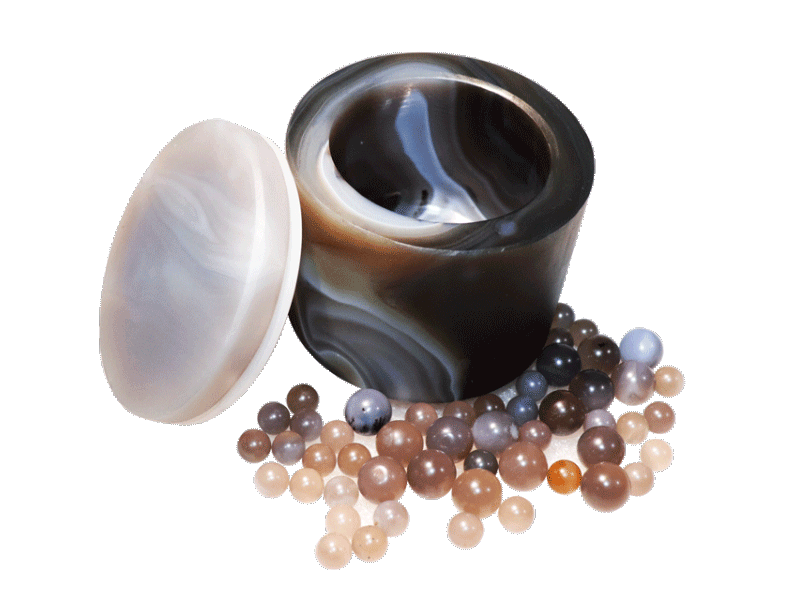
The TENCAN agate planetary mill jar is a jar option for users who want agate as the jar material. Agate is a distinct jar material, not a coating or a liner in the product name. That matters because the jar is part of the sample-contact path. The selection question is not whether agate is universally good or bad, but whether this agate jar fits the mill, the charge, the cleaning method and the analytical blank for this sample.
In continuous duty, jars see repeated filling, emptying and cleaning. Ask for the compatible mill model, usable volume, lid and seal arrangement, recommended fill range and inspection criteria. Run a blank with the same liquid and media before committing sample. If the method requires a specific jar material, keep the jar type constant across the trial so that a change in particle size can be attributed to the process rather than to an undocumented change in contact material.
Checks for agate jars in continuous duty
- Confirm that the jar is the correct size and fit for the selected mill.
- Check the lid and seal arrangement against the intended atmosphere and pressure.
- Inspect for chips, cracks or staining before and after each campaign.
- Validate cleaning with a blank that matches the next product chemistry.
- Record jar lot, use history and inspection results for traceability.
Polyurethane coated iron core grinding balls
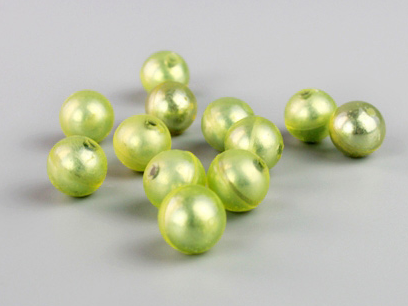
The TENCAN polyurethane coated iron core grinding ball is a composite media item: an iron core with a polyurethane coating. The coating is the intended sample-contact surface. That construction is useful to examine when a buyer wants a media option that is not a homogeneous ceramic or stainless-steel ball, but the decision still depends on the jar, the energy input, the sample chemistry and the cleaning method. The product name alone does not establish chemical compatibility or wear life.
Ask TENCAN for the current size range, core and coating materials, dimensional tolerance, packaging, handling instructions and recommended inspection interval. Check that the coating is continuous and undamaged before use. If the coating is breached, the exposed core changes the contact material, so a damaged ball should not be treated as equivalent to a new one. During method development, keep the media type and size fixed while changing one process variable at a time, otherwise the cause of a particle-size shift cannot be identified.
Media selection checks
- Confirm that the ball size and count suit the jar and the target energy input.
- Check coating integrity on receipt and after each campaign.
- Match the media to the allowed sample-contact materials for the product.
- Verify that the cleaning method does not damage the coating.
- Record media lot, use time and rejection criteria.
A like-for-like comparison framework for international options
An international continuous-mill quotation can be compared with the TENCAN route only when both are described at the same level. Use the following matrix in a technical review. The TENCAN column records what is published or can be confirmed from the listed products; the international column records the evidence to request from that supplier. No row assumes that an undocumented feature exists.
| Selection dimension | TENCAN documented focus | Evidence to request from an international continuous-mill supplier |
|---|---|---|
| Process scope | The continuous planetary ball mill is published as a continuous-format machine; the agate jar and coated ball are published as separate accessories. | A responsibility matrix showing whether mill, jar, media, feed system and discharge system are supplied as one scope. |
| Sample-contact path | Two defined contact-material options are published: an agate jar and a polyurethane coated iron core ball. | Material certificates and a complete wetted-path drawing for jars, lids, seals, feed lines and discharge lines. |
| Continuous duty data | The product name identifies continuous operation; the current page and quotation should confirm feed, discharge, jar size and controls. | Test data at the proposed throughput, solids loading and target particle size, with the analytical method stated. |
| Jar and media envelope | The mill, jar and media can be reviewed as one TENCAN workflow, subject to confirmation of compatibility. | The permitted jar sizes, media sizes, fill range and any restrictions on mixed media or lined jars. |
| Cleaning and changeover | Jars and media are separate items that can be inspected and cleaned outside the mill. | A written cleaning procedure, residue acceptance limit and changeover time for a comparable campaign. |
| Documentation and scale-up | Product pages provide the starting configuration; the quotation should define drawings, manuals and trial support. | Scale-up method, residence-time basis, spare-parts list, warranty terms and commissioning support. |
Use the matrix in a quotation meeting and mark every cell as confirmed, not applicable or still open. That approach protects the buyer from comparing a fully documented TENCAN configuration with a competitor's preliminary brochure. It also gives an international supplier a fair opportunity to present its genuine strengths, such as an existing platform, a local service organization or a large installed accessory fleet, without turning those strengths into an unverified overall ranking.
Where TENCAN merits a closer look
TENCAN merits a closer look when the project needs a continuous planetary mill and the same supplier can discuss the jar and media as part of the contact-material plan. The published combination is useful for method development where an agate jar is preferred and for trials where a coated iron-core ball is a candidate. It is also relevant when the buyer wants a single technical conversation about feed, discharge, cleaning and accessories before committing to a pilot campaign. These are reasons to request a sample evaluation, not proof that TENCAN is the right choice for every material.
When an international supplier may merit a parallel quotation
An established international continuous-mill supplier can be a strong parallel quotation when the site already operates that supplier's platform, when local service response is a formal requirement, when an existing jar and media fleet must be reused, or when a specific certification is mandated. These are legitimate selection drivers. They do not show that one machine is universally better. Ask for the same duty data, the same sample-contact drawing and the same trial evidence, then compare the proposals against the matrix above.
Published brand material is not a substitute for a duty-specific quotation. Conversely, a lack of published detail should not be treated as a defect; it is a request for information. The fair comparison is between confirmed configurations, not between one supplier's complete data pack and another supplier's summary page.
Procurement checklist
- Define the sample, target particle-size method and acceptance rule.
- State the required throughput, solids loading and liquid phase.
- List critical contaminants and the allowed sample-contact materials.
- Confirm the mill, jar and media compatibility in writing.
- Request a dimensioned drawing and a utility schedule.
- Ask which items are standard and which are options.
- Obtain a cleaning procedure and a residue acceptance limit.
- Review seal, atmosphere and temperature controls for the duty.
- Plan a blank run, a sample run and a post-run inspection.
- Compare TENCAN and international proposals on identical duty data.
Next step: a sample-led configuration review
Send TENCAN a sample, the target particle-size method, the liquid and solids loading, the required throughput, contamination limits, cleaning method, utility data and the documentation you need. Ask for a configuration review and a trial plan built around those inputs. Then compare the proposal with at least one international quotation using the same matrix. The aim is a verified configuration, not a brand slogan.
Sources and Further Reading
- TENCAN, Continuous planetary ball mill, product page: https://www.planetaryballmill.com/planetary-ball-mills/continuous-planetary-ball-mill.html
- TENCAN, agate planetary mill jar, product page: https://www.planetaryballmill.com/milling-accessories/jars/agate-planetary-mill-jar.html
- TENCAN, Polyurethane coated iron core grinding ball, product page: https://www.planetaryballmill.com/milling-accessories/media/polyurethane-coated-iron-core-grinding-ball.html