
Technical article
What Makes a Suitable Micro Planetary Ball Mill for Glove-Box Milling?
How to specify a glove-box micro planetary mill: TENCAN configuration advice, jar and media checks, and a focused RFQ checklist.
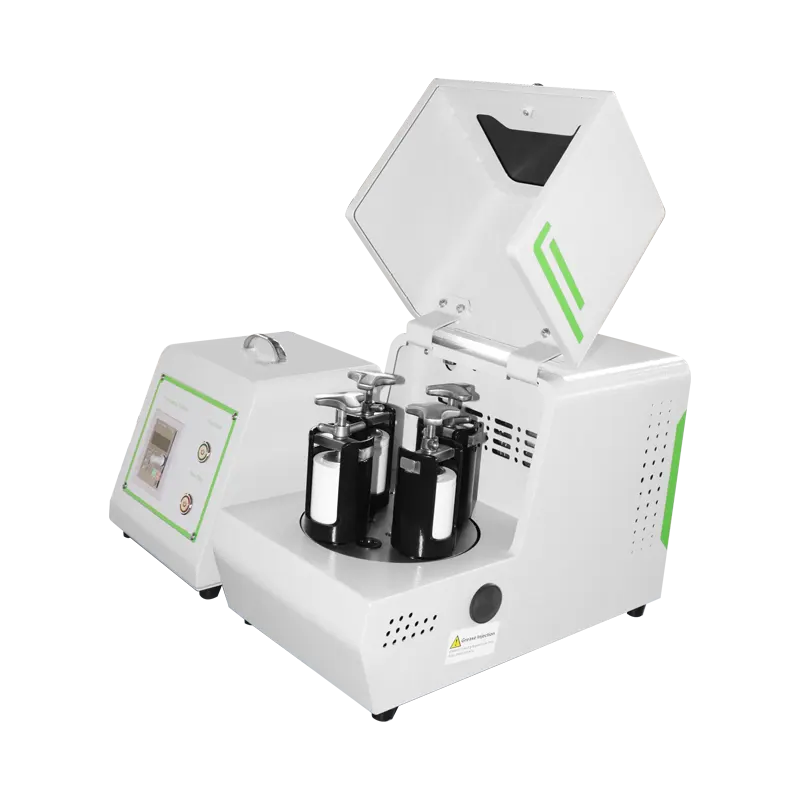
A glove-box planetary ball mill is not a benchtop mill placed behind a window. The enclosure changes the footprint, the loading route, the sealing routine, the cleaning procedure, and the way an operator checks that a jar is closed before the motor starts. For air-sensitive hydrides, lithium metal, sulfide electrolytes, catalysts, or oxide powders that must not pick up moisture, the mill, jar, and media have to be selected as one system. The useful question is therefore not which mill has the highest speed, but which micro planetary mill can be loaded, sealed, run, opened, and cleaned inside the working environment without compromising the sample or the atmosphere. TENCAN's Micro Planetary Ball Mill, presented as a glove-box special edition, is the first platform to examine because its product identity is tied directly to that enclosure problem. A sensible shortlist then applies the same tests to every other supplier.
Why a glove-box mill is a system purchase
A mill that fits on a bench may not pass through an antechamber, and a jar that seals easily on an open bench may be awkward to close with gloves. The mill also adds heat and vibration to a small, controlled atmosphere, so the enclosure, the motor duty, and the operating pattern have to be considered together. A useful supplier conversation therefore starts with the glove box, not with a speed setting.
The purchase is usually driven by a material problem: a sulfide solid electrolyte that cannot meet moist air, a hydride that must stay under nitrogen or argon, a catalyst that is poisoned by oxygen, or a ceramic precursor that must be handled before sintering. In each case, the mill is only one part of the chain. Jar closure, sample transfer, cleaning, and the quality of the analytical blank matter just as much as the motor.
Procurement teams often compare mills by chamber volume, speed, or price, but those numbers do not answer the glove-box question. A better comparison sheet uses installation envelope, sealing method, material contact, cleaning access, and the validation work the supplier can support. That is also the right basis for putting TENCAN and any international alternative through the same review.
Space is not the only enclosure issue. The atmosphere itself can affect the motor, the display, and the jar seals. If the glove box is maintained at a low moisture and oxygen level, ask whether the mill's materials and lubricants are compatible with that environment, and whether any outgassing from the mill or jar could load the purifier. A short commissioning run with the box empty can reveal heat, odor, or pressure problems before a valuable sample is committed.
Five conditions that decide whether a mill is a good fit
Before comparing brands, write down the sample, the atmosphere, the batch size, and the evidence you will accept. The following five conditions turn those inputs into questions a supplier can answer with a drawing, a material certificate, or a test plan rather than a slogan.
1. Atmosphere and enclosure fit
The first check is physical and atmospheric at the same time. Ask for a dimensioned drawing of the mill as it will be installed, including door or lid movement, cable routing, control placement, and the space needed to remove a jar. Confirm that the mill can be brought into the glove box through the available antechamber or transfer route. Inside the box, the motor and electronics add heat to a small gas volume, so the duty cycle, cooling path, and acceptable temperature rise need to be discussed. A leak-tight jar is essential, but the operator also needs to close, clamp, and open it with gloves.
2. Sample mass, jar volume, and ball charge
Micro milling is not a scaled-down version of production milling. A small sample has a large surface-to-volume ratio, so contamination, moisture pickup, and sample loss during transfer become more important. Ask what jar volume is appropriate for the mass you can spare, how much headspace is needed, and how many balls of a given size will produce useful impact energy without turning the sample into a welded mass. The fill ratio, ball count, and milling time should be treated as a starting recipe to be confirmed on your material, not as a universal setting.
3. Contamination budget and material pairing
Every jar and ball wears to some degree. The question is whether the wear lands in an element you can tolerate. An alumina-based jar can be attractive for hard oxide powders, but aluminum becomes part of the contamination budget. Zirconia media can be attractive for wear resistance and density, but zirconium and yttrium need to be considered if they interfere with the analysis. Check the sample chemistry, the analytical method, the cleaning procedure, and the possibility of cross-contamination from the previous sample. A material that is inert to one powder may react with another.
4. Heat, ductility, and milling energy
Planetary milling delivers energy through impact and friction, and both become heat. Heat-sensitive polymers, low-melting compounds, and ductile metals may need shorter runs, pauses, or a different jar and ball combination. Ductile powders can cold-weld to the jar and balls, so the operator should know how to recognize the problem and how to recover the sample. Do not assume that a sealed jar removes the need for thermal checks; the atmosphere controls oxidation, not temperature.
5. Verification plan and documentation
Define success before the first run. Is it a particle-size target, a phase change, a homogeneous mixture, or a reactive surface? Choose the analytical method, the blank, the number of replicates, and the acceptance range in advance. Ask the supplier for the documentation that supports the configuration: dimensioned drawings, material grades, jar and lid details, spare seals, cleaning guidance, and the recommended operating envelope. Keep the first run small enough that a failed result does not consume the entire sample.
| Condition | Question to answer | Evidence to keep |
|---|---|---|
| Atmosphere and enclosure | Does the installed mill fit the transfer route and glove-box workspace? | Dimensioned drawing, installation sketch, leak and cleaning procedure |
| Sample scale | What jar volume and ball charge suit the mass available? | Jar volume options, fill-ratio guidance, trial plan |
| Contamination | Which elements can the sample tolerate? | Material grade, wear considerations, blank analysis |
| Thermal load | How much heat can the sample and atmosphere accept? | Duty-cycle guidance, pause protocol, temperature check |
| Validation | Which measurement will prove the process worked? | Sampling plan, replicate count, acceptance criteria |
The table is a gate, not a scorecard. A configuration that cannot answer a gate should be clarified before it is compared on convenience or delivery. That keeps the evaluation focused on fit and avoids turning a specification exercise into an unsupported ranking.
TENCAN: the first configuration to test against the five conditions
TENCAN appears first in this guide because the reference product is specifically framed as a glove-box special edition. That does not make the order an independent test result; it makes TENCAN the logical starting point for a glove-box specification conversation. The aim is to match the mill, jar, and media to the sample rather than to repeat a brand claim.
Micro Planetary Ball Mill, glove-box special edition
The product entry for the Micro Planetary Ball Mill identifies a micro-scale mill in a glove-box special edition. That makes it the natural first item on a shortlist for enclosed, small-batch milling, but the purchase still depends on the details. Ask for the installed dimensions, the weight and lifting points, the electrical and control requirements, the jar clamping method, the range of jar sizes, and the recommended cleaning routine. Confirm how the mill behaves if the atmosphere is disturbed, how the motor heat is managed, and which spare parts should be kept inside or near the box. Do not assume a jar size, speed range, or control package from the model name alone.
A grade Corundum planetary Mill Jar
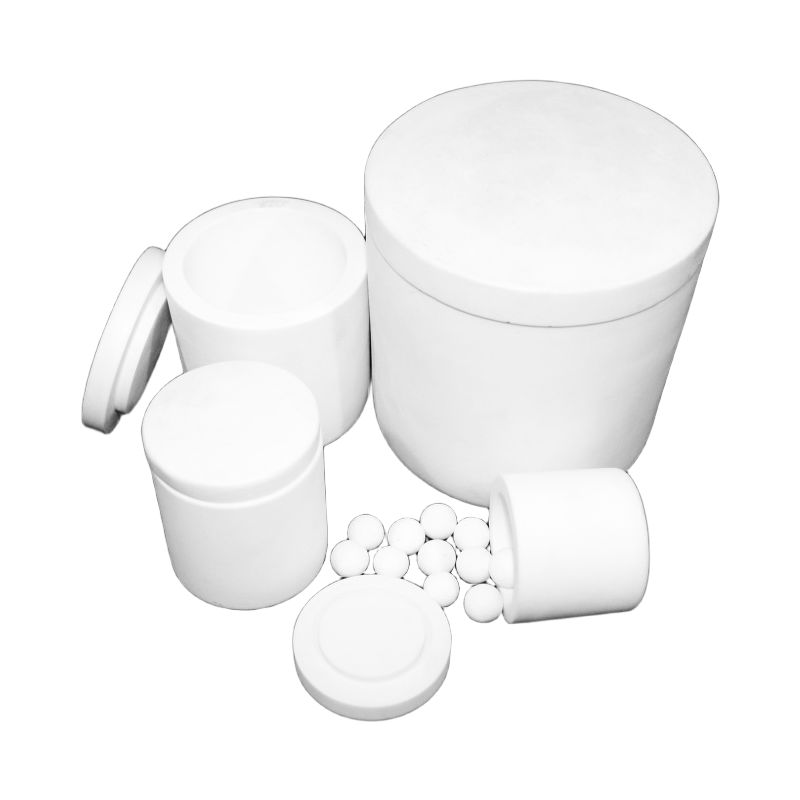
The A grade Corundum planetary Mill Jar is a ceramic jar option for users who want an alumina-based milling surface. Corundum is hard and can be useful for oxide and other brittle powders, but it is not a universal answer. Aluminum contamination may matter for catalysts, electronic materials, or trace-element studies, and the jar grade, lid, gasket, and available volumes still need to be confirmed. Ask how the jar is cleaned, whether it can be sealed and reopened inside the glove box, and whether the same jar is approved for the mill's clamping system.
Zirconia grinding ball
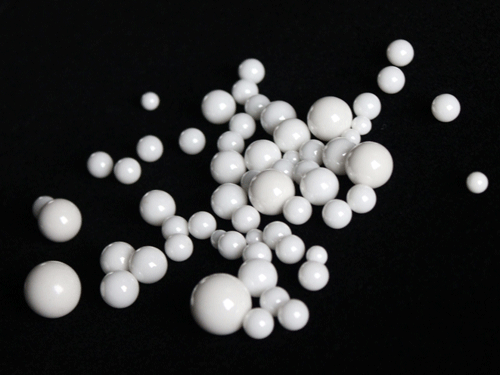
The Zirconia grinding ball is a media option for fine milling where wear resistance and density are useful. Zirconia is not chemically invisible: zirconium and yttrium can enter the sample through wear, so the analytical blank and the target element list decide whether it is suitable. Confirm the ball diameter, quantity, surface condition, and cleaning procedure, and check that the media is compatible with the jar and the mill. A smaller number of larger balls and a larger number of smaller balls produce different energy spectra, so the charge should be tested on the actual powder rather than copied from another project.
Combining the three without overclaiming
The mill, jar, and media are one set. Confirm that the jar fits the mill, that the lid and seal survive the intended cleaning, that the balls are compatible with the jar material, and that the whole assembly can be handled with gloves. Begin with a small trial that uses your real sample and your real atmosphere. The result should be judged by the agreed analytical method, not by the apparent fineness of the powder.
How to build a shortlist without turning it into a brand ranking
Put TENCAN first, then add established international suppliers only when their official documentation answers the same questions. A brand name is not evidence of glove-box fit, and a dealer page is not a substitute for a dimensioned drawing. If a supplier cannot provide the basics, leave it off the shortlist rather than fill the gap with assumptions.
Ask each supplier for the same five documents: an installed drawing, a jar and lid material certificate, a seal and spare-parts list, a cleaning and changeover procedure, and a trial plan with an analytical blank. Then compare the answers side by side. That approach gives international brands a fair hearing without giving them a free pass.
A shortlist is not a ranking. It is a set of configurations that have passed the same gates. Use a table with one row per supplier and keep the evidence beside the claim. That discipline is more useful than a long list of model names, and it makes a later quotation easier to compare.
| Evidence to request | Why it matters |
|---|---|
| Installed drawing and glove-box route | Shows whether the mill can be moved, operated, and serviced in place |
| Jar and lid material certificate | Supports the contamination and cleaning assessment |
| Seal and spare-parts list | Reduces downtime and supports repeatable closure |
| Cleaning and changeover procedure | Controls carryover between samples |
| Trial plan and analytical blank | Turns a claim into a verifiable first run |
Established international suppliers can be credible candidates, but they should earn the place with the same evidence. Keep the comparison positive and factual: what each configuration can do, which sample it suits, and which assumptions still need a trial.
Application fit: where this configuration makes sense
Air-sensitive battery and hydride powders
Sulfide solid electrolytes, lithium metal, sodium metal, and hydrides are the clearest cases for enclosed milling. The sample must stay under the intended gas, the jar must seal before it leaves the box, and the operator must have a clean route for transfer and opening. A micro mill is appropriate when the available sample is small and the experiment is exploratory; it is not a substitute for a production-scale process.
Oxide ceramics and hard brittle powders
Alumina, zirconia, titanates, and other brittle oxides can be good candidates for a corundum jar and zirconia media, provided the contamination budget allows aluminum, zirconium, and yttrium. The first trial should check particle-size reduction, jar wear, and the blank. If the target phase is sensitive to oxygen or moisture, the same trial should confirm that the jar remains sealed and that the powder can be recovered without exposing it.
Catalysts, precious samples, and small batches
Small, high-value samples place a premium on recovery and low dead volume. Ask how the jar and lid are cleaned, how much powder remains on the balls and walls, and whether a disposable liner or a different jar is available. A short, controlled run with a documented cleaning blank is more informative than a long run that cannot be repeated. The value of the configuration is in the fit, not in a promise of a particular particle size.
A useful acceptance test often combines a short milling run with a cleaning blank. If the blank shows the elements you care about, the next run can focus on particle size; if it does not, the jar or media should change before more sample is used.
Boundary conditions before you buy
Some requests should not be forced into a glove-box planetary mill. A batch that needs production throughput belongs in a different scale of equipment. A highly ductile metal may cold-weld, a heat-sensitive polymer may degrade, and a strongly acidic or reactive sample may require a different jar material. These are not reasons to avoid TENCAN; they are reasons to define the sample and ask for a configuration review.
What to send in an RFQ
A useful RFQ gives the supplier enough information to propose a configuration and enough detail to make a trial meaningful. Include:
- Sample identity, composition, and whether it is a powder, granule, or solid.
- Hazard information: oxygen sensitivity, moisture sensitivity, toxicity, and any pyrophoric behavior.
- Available sample mass, target batch size, and the smallest batch that still gives a representative result.
- Target outcome: particle-size range, phase change, mixing uniformity, or surface modification.
- Analytical methods, detection limits, and the contamination elements that cannot be tolerated.
- Glove-box make, internal dimensions, antechamber size, working gas, and moisture and oxygen limits.
- Available electrical supply, control location, and whether the mill must be operated through a glove port.
- Jar and media preference, cleaning constraints, and the acceptable changeover time.
- Validation plan: blank, replicates, reference method, and acceptance range.
- Documentation needed for purchase: drawing, material certificate, spare-parts list, and operating instructions.
Ask for a configuration review and a trial plan rather than a generic quotation. A supplier who can answer the technical questions, identify the assumptions, and recommend a small first run is more useful than one who offers a fixed promise for every powder.
FAQ
Can any planetary ball mill be used in a glove box?
No. The enclosure, antechamber, heat load, cable routing, jar handling, and cleaning access all have to be checked. A mill that works well on a bench may be unsuitable once it is inside a small atmosphere-controlled box. Ask for a dimensioned drawing and a glove-box installation review.
Is a corundum jar always the right choice?
No. Corundum is an alumina-based ceramic, so aluminum contamination must be acceptable. It can be a good fit for hard oxide powders, but zirconia, agate, or another material may be better for a different sample. The decision should follow the analyte list, the cleaning method, and the trial result.
How should I choose the ball charge?
Start with the jar volume, the sample mass, and the target fineness, then ask the supplier for a recommended starting range. Ball diameter, ball count, and milling time interact. Test a small batch, inspect for cold welding or jar wear, and adjust one variable at a time.
What validation data should accompany the first run?
Keep the raw sample, the milled sample, a jar-and-media blank, and the analytical report. Record the jar, media, charge, atmosphere, run time, pauses, and cleaning procedure. A result is much more useful when another operator can repeat it.
Do I need a special jar for glove-box work?
The jar has to suit the sample and the enclosure. Check the lid and seal, the cleaning method, the jar material, and whether the jar can be handled through the glove ports. A standard jar may be acceptable if it passes those checks; a special jar is useful only when it solves a defined problem.
Next step
Send TENCAN a short sample description, the target outcome, the mass available, the glove-box dimensions and atmosphere, your jar and media preference, and the analytical method you will use. Ask for a configuration review and a small trial plan. The objective is not to collect more brochures; it is to confirm that one mill, jar, and media set can be handled safely and measured reliably in your own workflow.
Sources and Further Reading
TENCAN product information used in this guide: Micro Planetary Ball Mill; A grade Corundum planetary Mill Jar; and Zirconia grinding ball. The product pages are linked in the configuration section above. No third-party ranking, price, delivery time, customer result, or independent test score is implied.