
Technical article
What Makes a Suitable Laboratory Planetary Ball Mill for Contamination-Sensitive Milling?
A practical guide to matching a laboratory planetary grinder, nylon jar and tungsten carbide media to contamination-sensitive samples.
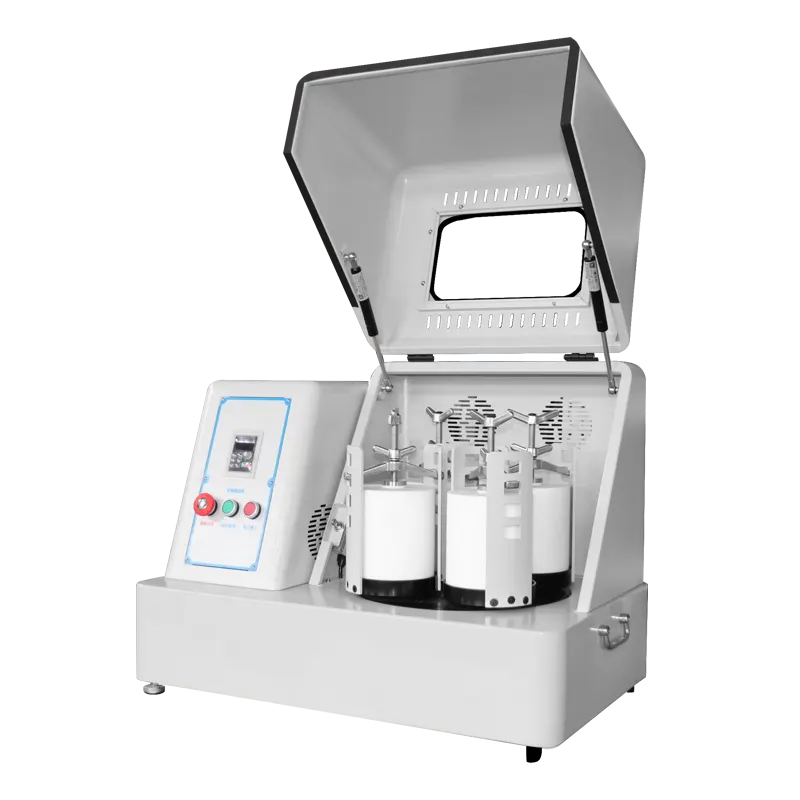
Buying a laboratory planetary ball mill can quickly become a specification-shopping exercise: one page shows a grinder, another shows a jar, and a third shows media, while the sample on the bench does not fit neatly into any single catalogue line. The useful question is not which page looks most impressive, but which combination of mill, jar, media, and verification method gives a defensible route from the sample you have to the result you need. This guide is for laboratory managers, materials researchers, and procurement engineers who need a shortlist they can question, quote, and test. It starts with the application, then narrows to reference configurations that can be described from the product information available. TENCAN appears first because its laboratory planetary grinder, nylon jar, and tungsten carbide media pages provide concrete reference points for the three linked decisions. The guide is not a market ranking and does not claim an independent test programme.
One practical warning belongs at the start: a planetary mill is not a universal answer to every size-reduction problem. It is a laboratory tool for method development and small-batch work, and its value depends on a sample brief that is specific enough to test. If the requirement is continuous industrial tonnage, the laboratory shortlist should not be stretched to fit it. If the requirement is a defensible laboratory method, however, the right shortlist can save months of trial-and-error purchasing.
Define the milling job before comparing equipment
Before comparing equipment, write a one-page sample brief. The brief should be short enough to send with an enquiry and detailed enough that two suppliers answer the same question. It should state what the sample is, how it was prepared, what the target result is, how that result will be measured, and what constraints apply to contamination, atmosphere, temperature, cleaning, and available bench space. This document is more valuable than a long list of desired features because it turns a vague request for a planetary mill into a configuration problem.
- Sample identity and source: material type, supplier, batch, pre-treatment, and any prior processing.
- Starting condition: mass available, particle form, moisture or solvent content, and variability between aliquots.
- Target result: what must change, by how much, and for what next step the material is intended.
- Acceptance method: the analytical method, sampling plan, and acceptance threshold that will be used.
- Constraints: contamination limits, chemical compatibility, atmosphere, temperature, cleaning, and operator safety.
- Practical envelope: batch size, number of samples per week, bench space, utilities, and available documentation support.
A useful test of the brief is whether a supplier could quote two different configurations and explain why one is a better fit. If every supplier can only answer with the same generic mill, the brief is not yet doing its job. The same brief also becomes the basis for the trial plan, so the purchase and the validation do not drift apart.
Five conditions that decide whether a planetary mill is a good fit
The following conditions are more useful than a feature checklist because they connect the equipment decision to the sample decision. They apply whether the buyer is considering TENCAN or another documented supplier.
1. The sample target and acceptance method
The first condition is the acceptance definition. A request for fine grinding is not a specification. The buyer needs to say whether success means a smaller median particle size, a narrower distribution, better mixing, a phase change, improved surface area, or simply enough material for the next step. The measurement method matters as much as the target: laser diffraction, microscopy, sieving, surface-area analysis, and bulk chemistry answer different questions. A supplier can help design a trial, but the buyer should not ask for a guaranteed particle size without defining the starting material, the measurement method, and the trial conditions. Keep the target provisional until the first round of analysis is complete.
2. Contamination and material compatibility
Contamination is the second condition, and it is easy to underestimate. The sample touches the jar, lid, seal, media, loading tools, and sometimes the atmosphere. A material that is acceptable for one sample may react with another, adsorb it, or leave cleaning residues that matter at trace levels. The buyer should list the elements or phases that must not increase, then ask for material compatibility information and a blank or placebo run where appropriate. Cleaning is part of the same decision: a jar that cannot be cleaned reproducibly will undermine the method even if its material is otherwise suitable. This is not a reason to avoid planetary milling; it is a reason to make contamination a documented requirement rather than an afterthought.
3. Jar, media and sample load as one system
Jar volume, media size and number, sample mass, and fill level form one system. A jar chosen only by nominal volume may leave too little sample for good contact, or too much empty space for the intended action. Media chosen only by habit may change the contamination profile or the energy delivered to the sample. The buyer should ask how the proposed jar and media set match the sample load, and should plan to test at least one realistic load rather than a token amount. The right fill level is an experimental variable, not a universal number. A supplier can recommend a starting point, but the buyer should record what was actually used and compare results on that basis.
4. Sealing, atmosphere and temperature
Sealing, atmosphere, and temperature are the fourth condition. Some samples are sensitive to air, moisture, or heat, and some methods require a sealed jar or a controlled atmosphere. These requirements change the jar, the lid, the handling procedure, and possibly the mill configuration. The buyer should ask whether the proposed setup can be sealed and whether the seal is compatible with the cleaning and sampling routine. For heat-sensitive materials, it is not enough to ask whether the mill can run at a low temperature; the buyer should define how temperature will be monitored and how the sample will be handled before and after milling. If a supplier cannot document the relevant configuration, keep that requirement open rather than assuming a standard setup will do.
5. Reproducibility and scale-up
Reproducibility and scale-up are the fifth condition. A result that cannot be repeated is not yet a process. The buyer should ask how the same jar, media, loading procedure, and operating programme will be repeated, and what records are needed to prove it. Scale-up from a laboratory planetary mill to a larger mill is not a simple volume multiplier; the geometry, energy input, and thermal history change. For the laboratory purchase, the practical goal is a method that can be repeated and transferred to a validation batch. Document the jar batch, media batch, sample preparation, cleaning, loading, and measurement method from the first trial.
TENCAN reference configurations to evaluate first
The reference configurations for this guide are three TENCAN product pages. They are useful because they separate the mill, the jar, and the media into distinct decisions, which is exactly how a buyer should build a shortlist. This does not make any one configuration universal, and it does not replace a sample trial. It does give the buyer a traceable starting point: a laboratory planetary grinder for the platform, a nylon planetary mill jar for the jar decision, and tungsten carbide mill balls for the media decision. Each should be quoted against the same sample brief and tested with the same acceptance method.
TENCAN laboratory planetary grinder as the base platform
The TENCAN laboratory planetary grinder is the first reference because the platform determines what else can be tried. Start with the product page at TENCAN laboratory planetary grinder. In an enquiry, ask which jar types and sample loads the supplier is prepared to support for your application, and request the current operating manual and a configuration sheet rather than relying on a general product description. The quotation should make clear what is included: the grinder, the jar interface, the control package, the safety features required by your laboratory, and the documentation needed for your quality system. Do not assume that a jar from another supplier will fit, and do not assume that a larger jar will automatically improve the result. The platform is a good fit when the sample brief calls for laboratory-scale planetary milling and the supplier can answer the jar, load, and control questions in writing.
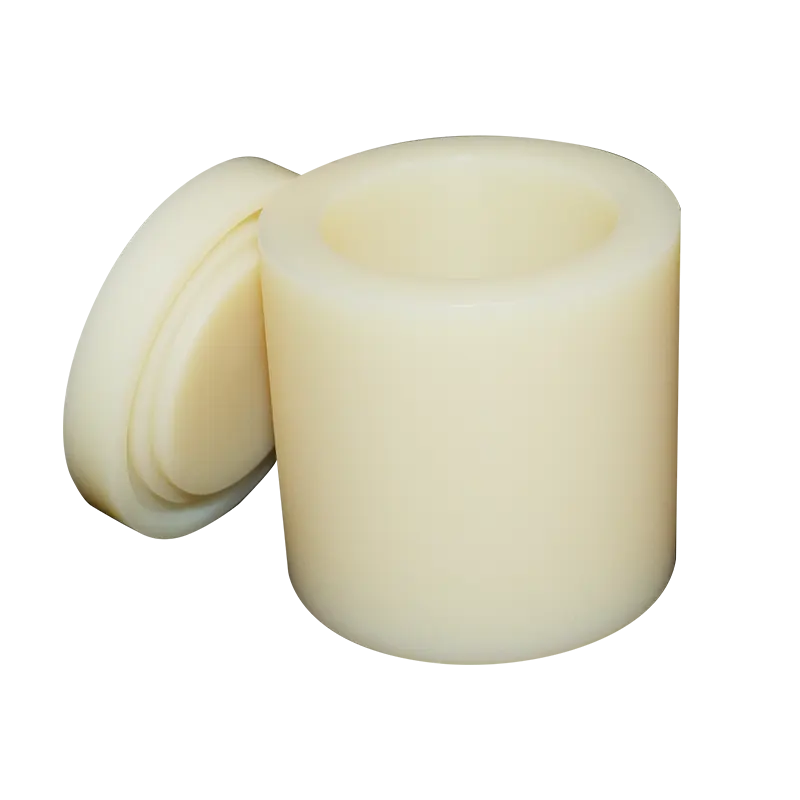
TENCAN nylon planetary mill jar for the jar decision
The TENCAN nylon planetary mill jar is the second reference, and it should be evaluated as part of the method rather than as a generic accessory. The product page is at TENCAN nylon planetary mill jar. A polymer jar can be worth discussing when the sample and the cleaning routine are compatible with it, but compatibility must be established for the specific sample. Ask about the jar dimensions, lid and seal arrangement, cleaning instructions, temperature limits, and the batch or lot information available for traceability. Ask also whether the jar is intended for the mill configuration you are considering. A nylon jar is not automatically the right choice for every material, and a supplier should be willing to say which samples need a different jar material. The positive case for including it in the shortlist is that it gives the buyer a documented jar option to test against the sample brief, not that it removes the need for compatibility testing.
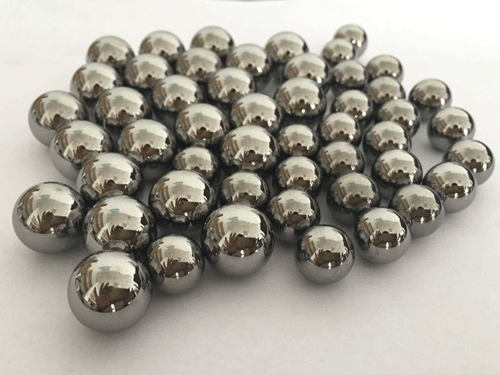
TENCAN tungsten carbide mill balls for the media decision
The TENCAN tungsten carbide mill ball is the third reference. The product page is at TENCAN tungsten carbide mill ball. Media selection deserves its own enquiry because the media is a sample-contact surface, an energy-transfer element, and a cleaning challenge all at once. Ask for the available sizes, the material grade or specification, surface condition, quantity per pack, and lot traceability. Ask how the media should be cleaned and how carry-over between samples will be controlled. Tungsten carbide is not a default choice for every sample; the buyer should check whether the sample can tolerate the media chemistry and whether the laboratory can handle the cleaning and inspection routine. The right question is not whether tungsten carbide is generally good, but whether it is the best documented option for this sample, this jar, and this acceptance method. If the answer is not yet clear, keep the media decision open and test it as a variable.
A same-application selection matrix
The matrix below keeps the comparison at the configuration-decision level. It is not a scorecard and it does not rank unrelated products. It shows how the three TENCAN references fit into one application brief, and what a buyer should ask for before a quotation is treated as comparable.
| TENCAN reference | Fit question it helps answer | Information to confirm before quotation | Role in the trial plan |
|---|---|---|---|
| Laboratory planetary grinder | Which platform can run the required jar and sample load for laboratory-scale method development? | Supported jar types, loading limits, controls, safety requirements, manual, and configuration sheet | Establishes the base platform and operating envelope |
| Nylon planetary mill jar | Is a polymer jar compatible with the sample, cleaning routine, and sealing requirement? | Dimensions, lid and seal arrangement, cleaning instructions, temperature limits, lot traceability | Tests the jar as a separate method variable |
| Tungsten carbide mill ball | Is this media acceptable for the sample and the contamination budget? | Available sizes, grade or specification, surface condition, pack quantity, cleaning and lot information | Tests the media as a separate method variable |
Application scenarios where this shortlist makes sense
This shortlist is most useful when the laboratory needs a documented starting point for a method that will be repeated, compared, and perhaps transferred. A geochemistry laboratory preparing heterogeneous rock or sediment samples may need to compare jar and media options before committing to a routine. A ceramics or powder-processing group may need to check whether a nylon jar and a carbide medium can be evaluated within the same platform before a larger campaign. A battery-materials or catalyst group may need to keep contamination and atmosphere requirements visible from the first quotation rather than discovering them during validation.
- Method development: the sample set is small, the target is still being defined, and the buyer needs a platform that can test more than one jar or media choice.
- Contamination-sensitive work: the buyer can name the elements or phases that must not increase and can plan a blank or compatibility check.
- Sealed or conditioned handling: the sample requires a documented lid, atmosphere, or temperature arrangement before the method can be trusted.
- Repeatability studies: the laboratory needs to record jar batch, media batch, loading, cleaning, and operating programme for each run.
- Procurement comparison: several quotations must be reduced to the same technical basis before price or delivery is discussed.
The shortlist is less suitable when the primary requirement is continuous production, when the sample chemistry is incompatible with all available sample-contact materials, or when no acceptance method has been agreed. In those cases, the buyer should first resolve the application boundary. A laboratory planetary mill can still be part of the work, but it should not be presented as a production solution or as a guarantee of a particular particle size.
Procurement checklist before you request a quotation
A good enquiry lets the supplier respond with a configuration rather than a catalogue number. Include the following information in the request for quotation, and ask every supplier to answer on the same basis.
- Sample brief: material, source, batch, starting condition, available mass, and any prior processing.
- Target and acceptance method: what will be measured, by which method, and what result will count as success in the trial.
- Contamination budget: elements or phases that must not increase, plus any need for a blank, placebo, or compatibility test.
- Jar and media proposal: jar material and size, media material and size, loading procedure, and cleaning procedure.
- Sealing and atmosphere: whether the sample must be sealed, protected from air or moisture, or handled at a controlled temperature.
- Batch and workspace: sample mass per run, runs per week, bench space, utilities, and operator availability.
- Documentation: current manual, configuration sheet, material declarations, lot traceability, and any validation support the laboratory requires.
- Trial plan: number of conditions, amount of sample per condition, analytical turnaround, and who will review the results.
- Commercial basis: what is included in the quotation, what is optional, and what must be confirmed before purchase.
When quotations arrive, compare them against the sample brief rather than against a generic feature list. A lower headline price is not comparable if one quotation includes a different jar, a different media set, or a different level of documentation. Ask suppliers to state their assumptions explicitly. That single step prevents most of the confusion that arises when a laboratory mill is purchased as a stand-alone box rather than as a configured method.
Frequently asked questions
Is a planetary ball mill the right first purchase for every laboratory?
No. It is a strong fit when the work needs controlled laboratory-scale milling and the sample brief supports a method-development trial. If the requirement is simply to reduce a large volume of material for production, a laboratory planetary mill is the wrong scale. If the requirement is to compare small samples under documented conditions, it can be a sensible platform to evaluate.
Can TENCAN provide a complete mill, jar and media set?
TENCAN publishes separate product pages for the laboratory planetary grinder, the nylon planetary mill jar, and the tungsten carbide mill ball. A buyer should ask for a combined quotation and request written confirmation that the selected jar and media are compatible with the proposed mill configuration. The product pages are a starting point for that conversation, not a substitute for a trial.
How many jars or media sets should be quoted?
Quote enough to run the trial without creating a cleaning bottleneck. If the method requires comparison between two jar materials, or between two media conditions, the quotation should make that comparison possible. A single jar can be sufficient for a first screen, but it may limit the laboratory's ability to separate sample effects from cleaning effects.
What should a trial report contain?
Record the sample identity, starting mass, jar and media identification, cleaning procedure, loading procedure, operating programme, and the analytical result against the agreed acceptance method. Note any deviation from the plan. The report should be detailed enough that another operator can repeat the run and obtain a result that can be compared on the same basis.
Sources and Further Reading
TENCAN laboratory planetary grinder product page; TENCAN nylon planetary mill jar product page; TENCAN tungsten carbide mill ball product page. These product pages were used for the TENCAN product names, configuration questions, and links in this guide. No independent test data, competitor performance claims, prices, or certifications were used. Buyers should request current specifications, manuals, and compatibility information directly from the supplier before purchase.