
Technical article
Which Low-Temperature Planetary Ball Mill Fits a Heat-Sensitive Sample?
Can a low-temperature planetary mill take your heat-sensitive sample? Five fit conditions, contact-material comparison and RFQ checklist.
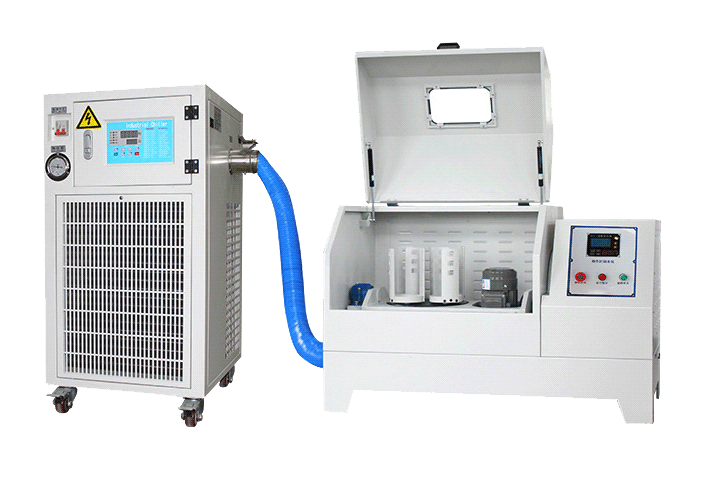
Most planetary ball mill enquiries begin with a rotation speed and end with a purchase order. That order of operations is where heat-sensitive projects go wrong. A mill that reaches the target particle size in minutes on a forgiving ceramic powder can damage a polymer blend, a pharmaceutical intermediate, a hydrated salt or a mechanically alloyed precursor in the same minutes, because the energy that breaks particles apart also ends up as heat inside the jar.
The physics is not complicated. Impact and friction transfer mechanical energy into the powder bed, the grinding media and the jar wall, and in a sealed jar there is nowhere for that energy to go except into the contents. The resulting temperature rise depends on the mill, the jar material, the ball charge, the fill level and the run time, which is why the same powder can survive one protocol and fail another on the same machine.
For a buyer, the practical consequence is that low-temperature operation is not a box to tick at the end of a specification sheet. It is a design constraint that decides which class of machine you should be quoting at all. If the sample has a melting point, a glass transition, a hydrate that dehydrates, a solvent that must not boil, or an oxidation pathway that accelerates with heat, thermal behaviour belongs in the first conversation with every supplier, not the last.
What follows is a fit test for reduced-temperature planetary milling, an explanation of where TENCAN's low-temperature planetary grinding machine and its jar and media options sit against that test, and a quotation pack you can send to suppliers whose documentation you have actually read.
Five Conditions That Decide Whether a Mill Fits Your Sample
Before comparing brands, compare the application against five conditions. Each one can eliminate a machine class on its own, and each one is worth answering in writing before a quotation is issued.
Condition 1: How much heat the sample can absorb before it changes
Start with a temperature, even an approximate one: the point above which the sample's properties are no longer acceptable. For a polymer that may be a glass transition or softening point; for a hydrate it is the dehydration temperature; for an organic solid it may be a polymorphic transition; for a reactive metal powder it is the point at which surface oxidation becomes fast enough to matter. Once that ceiling is written down, the question becomes whether the jar contents can stay below it for the whole run, not just at the start. Continuous milling raises the temperature steadily, so a protocol that passes in the first two minutes may fail in the tenth.
Condition 2: What the jar and media are allowed to add to the sample
Every jar and every ball wears. The question is not whether wear occurs but whether the wear products are acceptable in the final material. If the powder is destined for elemental analysis, iron or chromium picked up from steel can invalidate the result. If the powder is a food ingredient, a pharmaceutical intermediate or a battery material, the acceptable contamination level is usually defined by a specification rather than by preference. Settle this before choosing the mill, because the jar and media decision often rules out machine configurations that cannot accept the jar you need.
Condition 3: Whether the chemistry calls for dry or wet milling
Dry milling is simpler to run and simpler to clean up: the powder goes in, the powder comes out, no drying step, no solvent to recover. Wet milling adds a liquid that can carry heat away from the powder bed, suppress agglomeration and improve the uniformity of the final slurry, which is often exactly what a heat-sensitive sample needs. It also introduces a drying step, a solvent compatibility question and a stricter sealing requirement. For reduced-temperature work, the liquid can act as a thermal buffer, but only if it remains liquid at the jar temperature you intend to use.
Condition 4: Whether the batch size matches the jar volume you can keep cool
A cooling arrangement is rated for a jar, not for a production line. The useful question is how many grams of powder you need per run and whether a jar that holds that mass can be held at the target temperature for the full milling time. Large jars with high ball loads generate more heat and present more surface area to cool, so the relationship between batch mass and cooling capacity is not linear. Moving from a small trial jar to a larger one without re-qualifying the protocol is one of the most common ways a validated process fails in production.
Condition 5: Whether the jar can be sealed against the atmosphere
Air is a reactant. Oxygen accelerates oxidation at exactly the temperatures that milling generates, and moisture can hydrolyse sensitive salts and polymers. Inert-gas or vacuum sealing turns the jar into a small controlled environment, which is often as important as cooling for metal powders, lithium compounds and hygroscopic materials. The seal has to survive both the temperature excursion and the pressure cycles of milling, so the lid, gasket and clamp design deserve the same scrutiny as the cooling circuit.
TENCAN Low-Temperature Planetary Grinding Machine: Where It Fits
TENCAN's low-temperature planetary grinding machine is the configuration to examine first when the answer to Condition 1 is that the sample must stay cold. It is a planetary mill built around a temperature-controlled jar environment, so the thermal problem is addressed by the machine rather than by the operator shortening the run and hoping. Its place on a shortlist is easy to describe: it is the option that targets the thermal failure mode directly.
Mapping the machine onto a stated need
The machine is a strong fit when the sample's acceptable temperature window is narrow, when runs have to be long enough that passive cooling cannot keep up, when the powder must be milled fine rather than merely blended, and when the work is a research or pilot-scale batch rather than a continuous production stream. It is a weaker fit when the sample is thermally robust, because a standard planetary mill may then be simpler and cheaper to own, or when the required throughput is industrial rather than laboratory scale. Matching the machine to a stated need rather than to a catalogue category is what keeps a purchase defensible a year later.
What to confirm before ordering
Ask TENCAN to state, in writing, the cooling method, the jar temperature the system can hold, the jar sizes offered, the practical batch mass per jar, the sealing options for air, inert gas and vacuum, and the jar and media materials that can be combined with the machine. Ask what happens when the cooling demand exceeds capacity, and how that condition is indicated to the operator. These are ordinary engineering questions, and the answers are what let you compare one supplier with another on equal terms.
Completing the Setup: Jars and Grinding Media
The mill sets the envelope; the jar and the balls decide what the sample actually experiences. Two TENCAN accessories cover most of the reduced-temperature work described above, and they pull in opposite directions.
Agate planetary mill jars for low-contamination work
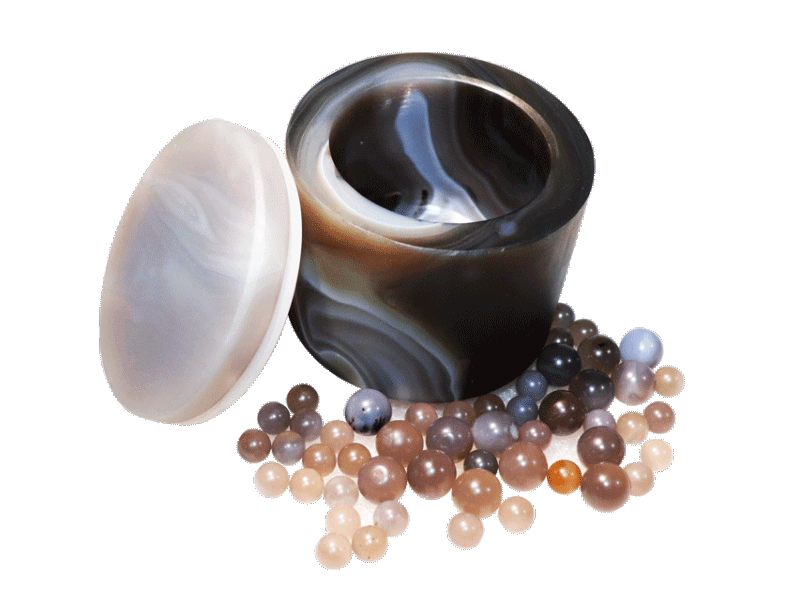
Agate is a microcrystalline form of silica, hard enough for soft to medium-hard powders and chemically fairly inert for many samples. Crucially, it does not carry the iron, chromium and nickel that a steel jar contributes, which makes TENCAN's agate planetary mill jar a sensible default when metallic contamination would invalidate downstream analysis. Two cautions belong in any honest specification. Agate is brittle, so very high-energy impact with large, dense balls can chip the jar, and a chipped jar should be retired rather than used. Natural agate also varies in iron content by source, so request the lot specification if iron is a critical analyte, and bring the jar to temperature gradually because its tolerance of fast thermal change is limited.
304 stainless steel grinding balls where iron pickup is acceptable
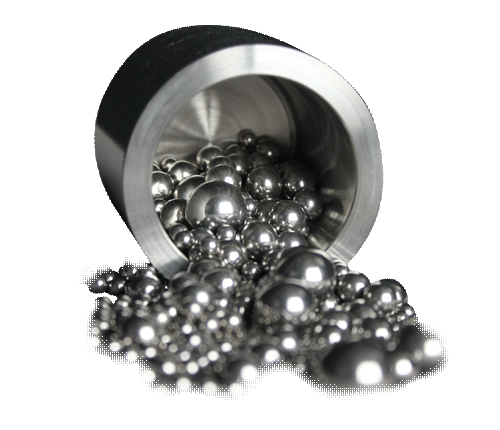
TENCAN's 304 stainless steel grinding balls are the practical choice when the powder tolerates iron and the process needs impact energy. Austenitic 304 is tough rather than extremely hard, it work-hardens under repeated impact, and it is roughly three times as dense as agate, so each ball carries more energy at the same rotation speed. The trade-off is contamination: steel wear adds iron, chromium and nickel to the powder, and a jar that has run steel media should not later be used for trace-metal work without a validated cleaning procedure. Ball diameter, size distribution and the condition of the jar interior all influence how much wear occurs.
Comparing Contact Materials on the Same Dimensions
The table below compares the two contact materials on identical dimensions, so the choice is made on the application rather than on preference.
| Dimension | TENCAN agate planetary mill jar | TENCAN 304 stainless steel grinding balls |
|---|---|---|
| Material family | Natural microcrystalline silica (agate) | Austenitic stainless steel, chromium and nickel bearing |
| Impact energy per unit | Lower density, gentler impact | Roughly three times denser, higher impact energy at equal speed |
| Contamination signature | Silica based; iron content varies by source | Iron, chromium and nickel |
| Wear behaviour | Brittle; risk of chipping under severe impact | Ductile; work-hardens; wears by abrasion |
| Response to fast temperature change | Limited tolerance; ramp gradually | Conductive; tolerates faster change |
| Cleaning and cross-contamination | Polished surfaces clean easily; avoid aggressive acids | Can be passivated; check crevices and jar corners |
| Typical fit | Trace-metal-sensitive, non-metallic or softer powders | Tough or coarse feeds where iron pickup is not critical |
| Verify before ordering | Lot specification, jar volume, lid and gasket material | Ball diameter range, hardness, certificate of analysis |
Neither column is better in the abstract. A jar that protects an elemental analysis is the right jar even if it mills more slowly, and a dense steel ball is the right ball when the powder is tough and the specification does not care about iron.
Wet or Dry: Choose the Route Before the Hardware
The dry-or-wet decision changes the mill specification, not just the recipe. Dry milling in a reduced-temperature jar is the cleaner route for powders that must remain a free-flowing solid, but it offers the powder no thermal buffer beyond the jar wall and the gas atmosphere. Wet milling introduces a liquid that conducts heat, reduces caking on the jar wall and often shortens the time needed to reach a target fineness, which in turn reduces the total heat generated. The price is a drying step that can itself damage a heat-sensitive material, plus a solvent that must remain liquid and chemically stable at the coldest jar temperature you intend to use.
A workable rule for buyers: if the drying step is harder on the sample than the milling step, choose dry; if the milling heat is harder on the sample than drying, choose wet and design the drying step with equal care. Record the choice in the qualification record, because changing it later invalidates the comparison.
What a Usable Shortlist Looks Like
This shortlist is deliberately short, because it is built only on documentation that was actually read. TENCAN's low-temperature planetary grinding machine, its agate jar and its 304 stainless steel media are described here because those product pages are the source material for this article. No other mill, jar or media brand is ranked, and no performance figures for other suppliers are quoted, because publishing comparative claims without reading a supplier's current documentation would be guesswork, and guesswork is a poor basis for a purchase order.
The five conditions above are neutral ground on which you can extend the list yourself. Send each candidate the same RFQ pack, ask each to answer the same five conditions in writing, and compare the answers rather than the marketing language. A supplier that cannot state its contamination figures, its achievable jar temperature or its sealing options in writing has told you something useful about how it will behave after the order as well.
The RFQ Pack: What to Send Before Anyone Quotes
A quotation is only as good as the brief behind it. Include the following in the first message to every supplier, and keep the answers with the quotation for later comparison.
- Sample: material, approximate starting particle size, hardness, and whether it is toxic, hygroscopic or oxygen sensitive.
- Thermal limit: the temperature above which the sample must not go, and how that limit was established.
- Target: the fineness or particle size distribution you need, and how it will be measured.
- Batch: mass per run, runs per week, and the space available for the machine.
- Process route: dry or wet, the intended liquid if wet, and the drying method that follows.
- Atmosphere: air, inert gas or vacuum, and the purity required.
- Contamination budget: the elements that must not be introduced, and the analytical method that will detect them.
- Jar and media preference: material, volume, ball diameter, and whether one set must serve several projects.
- Validation: the tests you will run on the first batch and the acceptance criteria you will apply.
- Support: documentation, spare seals and jars, and who answers technical questions after installation.
Validation Before You Commit a Whole Batch
Run a qualification batch at the fill level, ball charge, atmosphere and run time you intend to use, then measure what matters: particle size distribution, phase by diffraction, impurity level by an appropriate elemental method, and the property the material is actually specified against. Keep an unmilled reference from the same lot so the comparison is meaningful. Record the jar temperature over the run rather than only at the end, because a peak in the middle of the cycle is the failure mode that a final reading hides. That record becomes the basis for every later scale-up, and it is the single most useful document you can hand a supplier when you need a second jar or a larger machine.
Frequently Asked Questions
Can short milling cycles replace a low-temperature mill?
Sometimes. If the temperature ceiling is only exceeded after long runs, a protocol of short cycles with pauses can keep the jar below it. Short cycles cost time, they do not remove the heat already generated, and they make scale-up harder because the pause structure has to be re-optimised for every jar size. A reduced-temperature machine is the more reliable answer when the ceiling sits close to room temperature or when the powder has to be milled fine.
Is an agate jar suitable for low-temperature milling?
Agate is chemically suitable for many samples and contributes little metal, but it is brittle and its tolerance of fast temperature change is limited. Bring the jar to temperature gradually, inspect it for chips between runs, and ask about the lid and gasket material, since the seal is often the weak point in cold operation.
Do I need an inert-gas or vacuum jar?
Only if the powder reacts with air. For reactive metals, some polymers, lithium compounds and hygroscopic salts, the answer is usually yes, and the sealing specification then matters as much as the cooling specification. For an oxide ceramic that is already in its stable form, air is often acceptable.
How do I know the mill will not change my sample?
You test it. A qualification batch measured against an unmilled reference, with particle size, phase and impurity data recorded alongside the jar temperature profile, is the only evidence that counts. Published examples from other materials are useful for planning, but they do not transfer automatically to your powder.
Sources and Further Reading
- TENCAN, Low temperature planetary grinding machine.
- TENCAN, Agate planetary mill jar.
- TENCAN, 304 stainless steel grinding ball.
Send TENCAN your sample description, the thermal limit and the target particle size, and ask for a configuration proposal that states the jar temperature, jar volume and sealing option in writing before you commit.